
Namma Academy of Commerce: Where Academic Learning Meets Global Career Opportunities
Bridging the worlds of academic excellence, business education and international exposure , Namma Academy of Commerce is advancing a broader vision of...
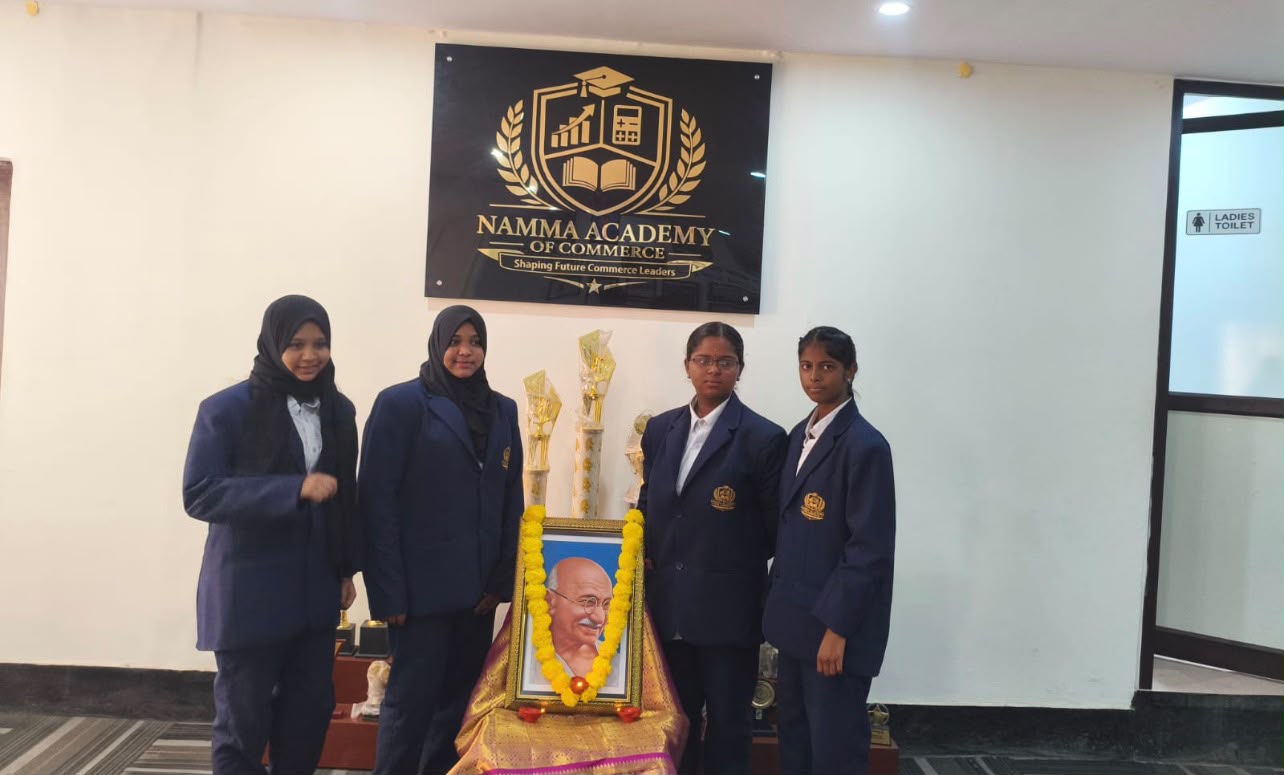
Bridging the worlds of academic excellence, business education and international exposure, Namma Academy of Commerce is advancing a broader vision of learning—one that encourages students to look beyond conventional qualifications and prepare for opportunities in an increasingly interconnected world.
Education Without Boundaries
The world of education is undergoing a profound transformation. A qualification remains an important foundation for professional success, but the opportunities available to today's students increasingly depend on how effectively they connect academic knowledge with practical understanding, global perspectives and the ability to adapt to change.
Businesses operate across borders. Technology is reshaping entire industries. Professional opportunities increasingly reward individuals who can combine specialised knowledge with communication, analytical thinking and an understanding of different markets and cultures.
Against this backdrop, the relationship between education and career development has become more significant than ever.
For Namma Academy of Commerce, this presents an opportunity to look at education through a wider lens: as a journey that begins with strong academic foundations and can extend towards higher education, management development and international exposure.
The institution's focus on commerce, undergraduate education and management pathways reflects the importance of giving students options as they plan their futures. The larger aspiration is to encourage learners to approach education not merely as a requirement for employment, but as an investment in their long-term intellectual and professional development.
Building the Foundations of Tomorrow's Professionals
Every successful professional journey begins with learning. Before students can navigate complex business environments or pursue international opportunities, they need a solid understanding of their chosen disciplines and the confidence to apply what they know.
Namma Academy of Commerce offers programmes across Pre-University and undergraduate education, including commerce and science streams and degree courses such as B.Com, BBA and BCA.
These pathways serve students at different stages of their development, creating opportunities to explore academic interests and consider the qualifications needed for their next steps.
Commerce, in particular, provides an important foundation for understanding the modern economy. Accounting introduces the language of financial performance; economics examines the forces that influence markets; and business studies explores how organisations make decisions, manage resources and create value.
Management education builds on these foundations by examining leadership, strategy, organisational behaviour and the challenges of running enterprises in competitive environments.
When students begin to understand how these disciplines connect with real organisations and economic activity, academic learning acquires a broader significance. It becomes a means of interpreting the world, evaluating opportunities and preparing for informed decisions.
From Academic Knowledge to Professional Capability
The transition from education to employment is one of the most consequential stages in a student's life. It requires not only knowledge, but also an understanding of how that knowledge can be used in professional settings.
Employers operate in environments where decisions must be communicated clearly, problems approached systematically and responsibilities handled with care. Technical competence matters, but so do teamwork, adaptability, analytical reasoning and professional judgement.
These capabilities develop through a combination of academic preparation, practical experience and continuous improvement.
For students, the challenge is to recognise early that professional development does not begin on the first day of a job. It begins with the habits formed during education: preparing thoroughly, asking thoughtful questions, meeting commitments, evaluating information and learning from feedback.
For educational institutions, the opportunity lies in making the connection between classroom learning and professional expectations clearer.
Namma Academy of Commerce's broader educational vision can be understood within this context. Academic qualifications provide the foundation, while career awareness and opportunities for further learning can help students develop a more informed understanding of the pathways available to them.
The aim is not to suggest that every student must follow the same route, but to encourage each learner to approach the future with preparation, perspective and purpose.
A Global Perspective on Management Education
In contemporary business, geographical boundaries do not always define the limits of professional opportunity. International trade, multinational organisations, digital commerce and cross-border collaboration have created a business environment in which global awareness can be a valuable asset.
For aspiring managers and entrepreneurs, understanding different markets and business cultures can broaden the way they approach decisions and evaluate opportunities.
Namma Academy of Commerce promotes an international integrated management pathway combining a Post Graduate Diploma in Business Administration (PGDBA) in India with an MBA programme at Lincoln University College, Malaysia, according to its programme information.
The two-year pathway is structured around study in India during the first year and Malaysia during the second year. The first-year qualification is the PGDBA, followed by the MBA component, which is organised on a trimester basis.
This pathway offers prospective students an opportunity to explore a programme that combines domestic academic preparation with an international study experience. Such exposure can introduce learners to a different academic environment and encourage a broader understanding of management, business practices and cultural perspectives.
For students considering international education, careful planning remains essential. Admission requirements, progression conditions, qualification recognition and the specific terms of the programme should be reviewed before enrolment.
The significance of international management education extends beyond studying in another country. At its best, it encourages students to examine familiar business questions from different perspectives and develop a more informed understanding of an interconnected economy.
Preparing for a Business World in Motion
The professional landscape is not static. Artificial intelligence, data analytics, digital platforms and emerging technologies are influencing the way organisations understand customers, manage operations and make strategic decisions.
For future business professionals, this means that traditional management knowledge must increasingly sit alongside digital awareness and a willingness to learn continuously.
A finance professional may need to interpret data more effectively. A marketing specialist may need to understand digital consumer behaviour. An entrepreneur may need to evaluate new technologies and determine whether they offer a genuine commercial advantage.
These examples illustrate a wider principle: career readiness is not achieved through a single qualification or skill. It involves the capacity to combine knowledge, judgement and adaptability as circumstances change.
Students who understand this relationship can approach their education with a clearer sense of direction. They can begin to identify the capabilities relevant to their interests, explore additional learning opportunities and recognise that professional development continues long after formal study.
An institution's contribution is to establish the academic foundation and learning environment from which that development can grow.
The Value of Learning Beyond Familiar Boundaries
International exposure is one part of a broader educational experience. Equally important is the opportunity to understand how knowledge operates outside the immediate boundaries of a classroom.
Business case studies, collaborative projects, presentations, industry interactions and educational visits can help students explore how organisations function and how decisions are made in practice. When these activities are available and thoughtfully integrated into a programme, they can complement formal instruction and encourage more independent thinking.
For learners considering careers in business and management, these experiences can also help connect academic concepts with professional questions: How does an organisation respond to competition? What influences customer decisions? How are resources allocated? What makes a business model sustainable?
Such questions encourage students to move from simply learning definitions to examining the reasoning behind decisions.
The value of this approach lies in its potential to make education more engaging, relevant and connected to the world students hope to enter.
A Student's Future Is Larger Than a Single Qualification
Career journeys rarely follow identical patterns. Some students may progress directly into employment after graduation; others may pursue postgraduate education, professional specialisation or entrepreneurship. International study may be relevant to some, while others may build their careers within their local industries and communities.
There is no single definition of success that fits every learner.
What matters is that students understand their options, recognise the requirements of different pathways and develop the confidence to make informed decisions.
This is where academic guidance and a wider understanding of career opportunities become particularly valuable. Students benefit from knowing how their current studies relate to further qualifications, what additional capabilities different professions may require and how their interests might translate into practical ambitions.
For Namma Academy of Commerce, the opportunity is to connect the different stages of this journey—from pre-university education and undergraduate study to management education and broader professional aspirations—within a coherent vision of student development.
The emphasis is on possibility supported by preparation: helping students understand what they can pursue while recognising the work, commitment and continued learning required to achieve their goals.
Shaping a More Connected Educational Future
The future belongs not simply to those who accumulate qualifications, but to those who continue to develop their understanding and use their knowledge responsibly.
Academic rigour, practical awareness, global perspective and professional adaptability each contribute to this wider picture. None can replace the others entirely; together, they can provide a stronger foundation for navigating a changing world.
Namma Academy of Commerce's educational vision brings this relationship into focus. By connecting academic pathways with management education and opportunities to explore international study, the institution seeks to position learning within a broader conversation about students' futures.
The journey from classroom to career is not completed in a single step. It develops through successive stages of study, experience, reflection and informed decision-making.
Ultimately, the most valuable education is one that expands a student's understanding of what is possible—and provides the knowledge, perspective and determination to pursue it. At the intersection of academic learning and global opportunity lies the potential for students to build futures defined not only by the qualifications they earn, but by the contribution they are prepared to make.
— Dr Ishtiaq Ahmed
Founder & CEO, Namma Academy of Commerce
Related Stories


Reader comments are moderated as per Daily News Axis editorial standards.








