
Scientists Explore Planets That Could Be More Suitable for Life Than Earth
Earth remains the only known planet to support life, but astronomers are investigating whether other worlds across the universe could offer even more ...
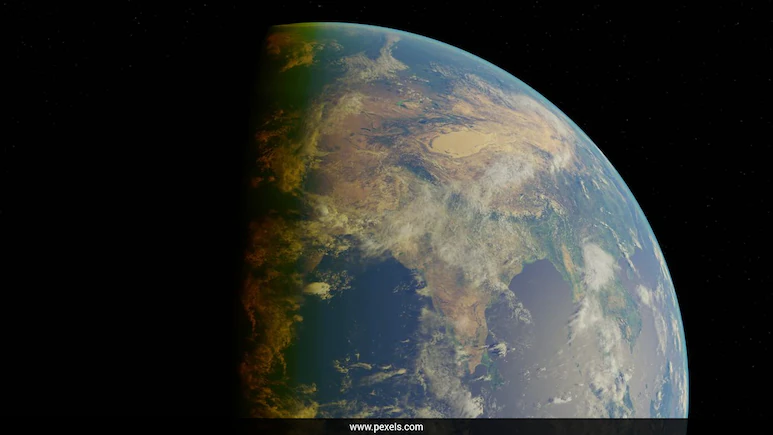
Earth remains the only known planet to support life, but astronomers are investigating whether other worlds across the universe could offer even more favourable conditions for living organisms. These hypothetical planets, known as superhabitable planets, may have more stable climates, greater amounts of accessible water and environments that allow life to evolve over much longer periods.
The idea challenges a familiar assumption in the search for extraterrestrial life: that scientists should concentrate primarily on finding planets resembling Earth. Researchers are instead considering whether worlds with somewhat different characteristics might provide better conditions for complex life to emerge and survive.
No superhabitable planet has yet been confirmed. However, developments in astronomy and upcoming space missions could help scientists identify promising candidates and investigate whether their environments could support life.
What Makes a Planet Superhabitable?
Superhabitable planets are theoretical worlds that could provide more favourable conditions for life than Earth. Some scientific proposals suggest that such planets might be approximately 20 to 30 per cent wider than Earth and have around twice its mass.
Their greater size could help them retain thicker atmospheres, potentially supporting relatively warm and stable surface conditions. A larger iron core might also generate a stronger magnetic field, which could help shield a planet from certain forms of harmful radiation.
Researchers have also considered planets featuring extensive shallow seas, lakes and island environments. On Earth, shallow coastal waters and tropical island ecosystems support a wide range of organisms. If similar habitats existed across larger areas on another planet, they might offer opportunities for substantial biological diversity.
These characteristics are possibilities rather than established requirements. A planet's size, atmosphere, water supply, temperature and geological activity would all need to be considered before scientists could assess its habitability.
Why Orange Stars Are Attracting Attention
One promising area of research involves planets orbiting K-dwarf stars, sometimes called orange stars because of their colour. These stars are generally smaller and cooler than the Sun, and they consume their fuel more slowly.
That slower evolution could be important for life. While stars change over time, planets orbiting K-dwarfs may have billions of additional years in which biological processes could develop and become more complex.
Astrobiologist Iva Vilovic has explored how light from these stars might affect plant growth. In a laboratory experiment in Berlin, she grew garden cress under artificial orange light designed to imitate the light of a K-dwarf star. The plants grew faster and taller than those exposed to simulated sunlight.
The experiment offers a possible clue about how photosynthesis might function under different stellar conditions. However, laboratory plant growth does not establish that alien ecosystems exist or that life would necessarily thrive on planets orbiting orange stars.
Earth May Not Remain Habitable Forever
Earth's suitability for life also changes over geological timescales. The Sun is gradually becoming brighter, and scientists estimate that rising solar energy could eventually make Earth unsuitable for complex life, potentially in roughly 500 million years.
This does not mean Earth is currently becoming uninhabitable in the near future. Rather, it illustrates that even a planet capable of sustaining life for billions of years has limits.
The concept of superhabitable worlds was explored in a scientific paper published in 2014 by astronomers René Heller and John Armstrong. Their work encouraged researchers to consider a broader range of planetary environments instead of focusing exclusively on Earth-like worlds.
How Scientists Could Find These Planets
Future astronomical missions may help turn the idea into a testable scientific question. The European Space Agency's PLATO mission, planned for launch in 2027, is expected to search for planets around other stars, including rocky worlds that could be suitable for further investigation.
Finding a potentially habitable planet would be only the first step. Scientists would then need to study its atmosphere and look for chemical signatures that might indicate biological activity. The James Webb Space Telescope and future observatories could contribute to this research, although detecting convincing evidence of life remains difficult.
For now, Earth remains the only confirmed home of living organisms. The search for superhabitable planets is an effort to understand whether nature might have produced environments even more favourable to life.
Related Stories


Reader comments are moderated as per Daily News Axis editorial standards.








