
Navratri 2026: Try Farali Handvo, a Gujarati Fasting Recipe Made With Sabudana and Moraiyo
Navratri fasting does not have to mean eating the same sabudana khichdi or potato dishes every day. Farali handvo, a fasting-friendly variation of the...
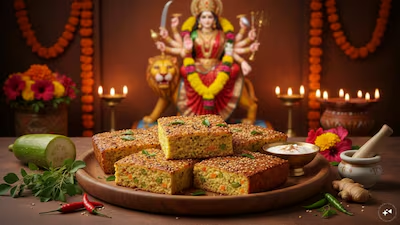
Navratri fasting does not have to mean eating the same sabudana khichdi or potato dishes every day. Farali handvo, a fasting-friendly variation of the traditional Gujarati savoury cake, offers another option for people looking to add variety to their vrat menu during Sharad Navratri 2026.
Unlike conventional Gujarati handvo, which is generally prepared using rice and lentils, the fasting version can be made with moraiyo (barnyard millet) and sabudana (tapioca pearls). The ingredients create a soft interior and a lightly crisp exterior when cooked properly, while green chillies, cumin and fresh coriander can add flavour.
The recipe is suitable for those whose fasting rules permit these ingredients. As vrat customs differ between households and regions, it is important to check the ingredients against individual fasting practices before preparing the dish.
What Makes Farali Handvo Different?
Traditional handvo is a popular Gujarati savoury preparation commonly made with a fermented mixture of rice and lentils, often combined with grated bottle gourd and spices. It is typically cooked until the outside develops a golden crust while the inside remains moist.
Farali handvo adapts the idea for fasting by replacing the usual grain-and-pulse mixture with ingredients commonly used in vrat cooking. Moraiyo provides the main grain component, while sabudana helps bind the mixture and contributes to its texture.
The result is a savoury dish that can be served for breakfast, as an evening snack or as part of a fasting meal. It also provides an alternative to deep-fried fasting snacks, depending on the amount of oil used and the cooking method chosen.
Ingredients Needed for Vrat-Friendly Handvo
The preparation generally uses a small selection of ingredients that are widely available in Indian kitchens.
Moraiyo and sabudana form the base of the mixture. Curd may be added for moisture and flavour if dairy products are permitted during the fast. Green chillies, cumin, fresh coriander and sendha namak can be used for seasoning according to personal preference.
A little oil or ghee is needed for greasing the cooking vessel and preparing the tempering. Sesame seeds may also be added if they are acceptable under the household’s fasting rules.
The proportions can be adjusted depending on the desired consistency. The mixture should be thick enough to hold its shape rather than becoming watery.
How to Prepare Farali Handvo at Home
Begin by washing the moraiyo and sabudana thoroughly. Soak them as required until they soften, then grind or combine them into a batter-like mixture. The sabudana should be sufficiently softened before cooking to help achieve an even texture.
Add the permitted seasoning, including sendha namak, cumin, chopped green chillies and coriander. If using curd, mix it in gradually and adjust the consistency without making the batter too thin.
Grease a heavy-bottomed pan or suitable cooking vessel. Spread the mixture evenly, cover it and cook over a low flame. Allow the bottom to turn golden before carefully flipping the handvo or cooking it through using an appropriate covered-pan method.
Keep the heat moderate so the outside does not brown too quickly while the centre remains uncooked. Once both sides are cooked and the mixture has set, remove it from the pan and let it rest briefly before cutting into portions.
Serve warm, with a fasting-friendly chutney or plain curd if these are allowed during the vrat.
A Different Addition to the Navratri Fasting Menu
Farali handvo brings a familiar Gujarati preparation into the Navratri kitchen with a few ingredient changes. Its savoury flavour and firm texture make it an option for people who want something different from the usual sweet or potato-based fasting dishes.
For a lighter preparation, use only the oil needed for cooking and pair a portion with an accompaniment permitted during the fast. The key is to follow household vrat rules and ensure the ingredients are fully cooked before serving.
As Sharad Navratri 2026 gets underway, this variation offers Gujarati food lovers another way to bring regional flavours to their fasting meals without relying on the conventional handvo recipe.
Related Stories


Reader comments are moderated as per Daily News Axis editorial standards.








