
CJI Surya Kant Rejects Rahul Gandhi’s Request for Meeting Over ‘Vote Chori’ Allegations
Chief Justice of India Surya Kant has declined a request from Congress leaders Rahul Gandhi and Mallikarjun Kharge for a meeting to discuss allegation...
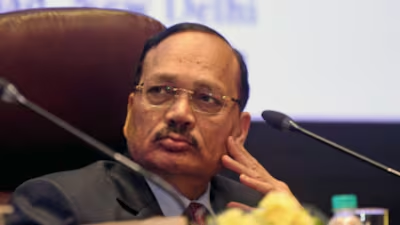
Chief Justice of India Surya Kant has declined a request from Congress leaders Rahul Gandhi and Mallikarjun Kharge for a meeting to discuss allegations of electoral irregularities, including the opposition’s claims of “vote chori”. The decision comes ahead of a planned INDIA bloc march to the Supreme Court on October 12, with opposition parties seeking action over voter-list revision and demanding the resignation of Chief Election Commissioner Gyanesh Kumar.
The two opposition leaders had sought an appointment between 4 pm and 5 pm on Monday to submit a memorandum outlining their concerns. The Chief Justice communicated his response through official email, according to reports citing sources familiar with the development.
The refusal has created an obstacle for the opposition’s plan to present its demands directly to the head of the judiciary. However, the leaders remain free to pursue their concerns through the established legal process.
Why the Chief Justice Declined the Meeting
The issues raised by Rahul Gandhi and Kharge are already under consideration in the Supreme Court, sources said. The Chief Justice indicated that a meeting to discuss matters pending before the court would not be appropriate under the circumstances.
The constitutional separation between the judiciary and the executive was also central to the reasoning reported. The Supreme Court cannot use its administrative functions to intervene in the government’s operations or issue directions on disputes that require judicial proceedings.
Opposition leaders have nevertheless been left with the option of filing a formal petition. Any such application would be considered through the court’s established procedures rather than through a private meeting with the Chief Justice. Related matters are scheduled to come before the Supreme Court on October 13, potentially providing a judicial avenue for the issues being raised.
Opposition’s Demands Over Electoral Processes
The proposed memorandum brings together several demands linked to the opposition’s concerns about election administration.
These include ending alleged electoral malpractice, removing the Special Intensive Revision (SIR) of electoral rolls, seeking Gyanesh Kumar’s resignation and restoring paper ballots instead of electronic voting machines.
The SIR process involves reviewing and updating voter lists. Opposition parties have questioned whether the exercise could lead to eligible voters being removed from electoral rolls and have called for greater transparency in its implementation.
The allegations have become a point of confrontation between opposition leaders and the Election Commission. However, the opposition’s claims remain allegations and should not be treated as established findings without evidence and an appropriate legal determination.
Rahul Gandhi Plans March to Supreme Court
Despite the refusal of the meeting request, the INDIA bloc has announced plans to proceed with its demonstration in New Delhi on Monday.
Rahul Gandhi has called on opposition parties, young people and civil society groups to participate in the march, presenting it as an effort to raise concerns about democracy and constitutional institutions.
The Congress has described the mobilisation as a broader campaign for electoral accountability. The demonstration also follows protests in the capital over the Election Commission and allegations of irregularities in voter-list management.
The proposed march is intended to bring attention to the opposition’s demands, although the Chief Justice’s decision means the planned memorandum will not be presented through the requested appointment.
What Happens Next?
The immediate focus will be on the opposition’s next steps and the handling of related cases before the Supreme Court. A formal petition would allow the leaders to place their arguments before the court through the appropriate legal channel.
The dispute has widened beyond the question of voter-list revision to include the accountability of constitutional authorities and the procedures available to challenge electoral decisions.
For the INDIA bloc, the challenge is now to convert its political demands into a legal case that can be examined on its merits. The court’s response to any formal proceedings, rather than a meeting with its Chief Justice, will determine how these concerns are considered within the judicial system.
Related Stories


Reader comments are moderated as per Daily News Axis editorial standards.








