Super El Niño Intensifies as Pacific Ocean Heat Reaches Unprecedented Levels
A rapidly strengthening El Niño is raising concerns over another period of unusual global heat and increasingly disruptive weather patterns, with clim...
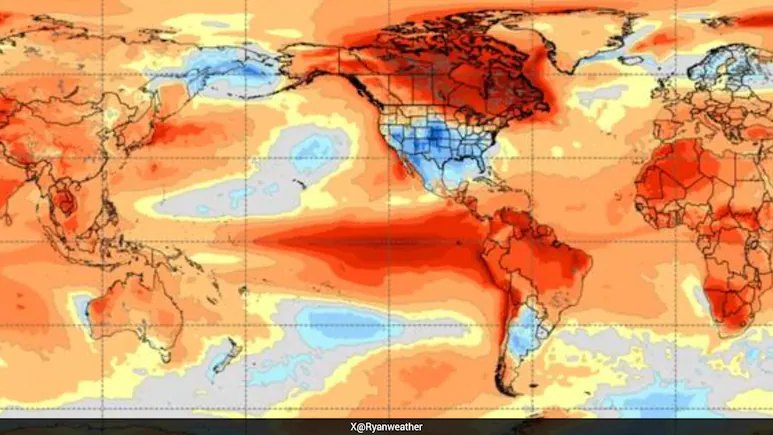
A rapidly strengthening El Niño is raising concerns over another period of unusual global heat and increasingly disruptive weather patterns, with climate agencies warning that the phenomenon could become one of the strongest observed in decades.
The latest forecasts indicate that sea surface temperatures across the central and eastern tropical Pacific could rise to around 3.7°C above the average between October and December 2026. Such a reading would place the current event in an exceptional category and could have consequences well beyond the Pacific region.
The World Meteorological Organization has said the El Niño event is likely to continue strengthening and could persist into February 2027. The agency has also warned that the warming associated with El Niño is occurring against a background of long-term climate change, potentially increasing the severity of some weather extremes.
Pacific Ocean Emerges as the Main Driver
El Niño is the warm phase of the naturally occurring El Niño-Southern Oscillation, a climate cycle that periodically alters atmospheric and oceanic conditions across the tropical Pacific. Its influence can extend across continents by changing rainfall, temperature and atmospheric circulation.
The current event has become particularly notable because of the scale of ocean warming. Recent observations indicate that temperatures in the Niño 3.4 region have climbed to exceptionally high levels, while forecasts suggest further strengthening during the final months of the year.
The expected warmth is not limited to one part of the planet. Climate projections point to above-average sea surface temperatures across broad areas during late 2026, increasing the potential for unusual weather conditions in different regions.
Heat, Drought and Heavy Rain Could Increase
El Niño does not produce the same effect everywhere. Instead, it changes established weather patterns, meaning some regions can experience prolonged dryness while others face unusually heavy rainfall.
A stronger event can contribute to higher global temperatures, intensify heat stress and alter precipitation patterns. Areas already dealing with climate-related risks could therefore face additional pressure on water supplies, agriculture, infrastructure and ecosystems.
The effects are also expected to vary significantly by region. A strong El Niño does not automatically mean every location will experience extreme conditions, as local weather is influenced by several other atmospheric and oceanic factors.
Why Scientists Are Watching 2026 Closely
The intensity of the current event has attracted particular attention because forecasts suggest it could rank among the strongest El Niño episodes recorded since at least the middle of the 20th century. The combination of unusually warm Pacific waters and an already warming global climate makes the event especially significant.
Earlier official assessments had already indicated that El Niño could strengthen substantially during the October-December period. Indian government information has also cautioned that there is no formally defined scientific category called “Super El Niño”; the term is commonly used in public discussion to describe an exceptionally strong event.
Researchers are also examining the potential human consequences. A University of Chicago Climate Impact Lab estimate cited in recent reporting projected that the unusually strong El Niño could contribute to hundreds of thousands of additional deaths worldwide between June 2026 and February 2027, although such estimates represent modeled projections rather than confirmed outcomes.
With the event expected to remain influential into early 2027, scientists and authorities will continue monitoring ocean temperatures, rainfall patterns and regional weather developments to assess how the unusually strong El Niño evolves.
Related Stories


Reader comments are moderated as per Daily News Axis editorial standards.