
By-Elections, Satellite Internet Dispute and Nobel Prizes: Five Charts Explain the Week’s Key Developments
India’s political landscape, the future of satellite-based internet services and major international scientific achievements shaped several important ...
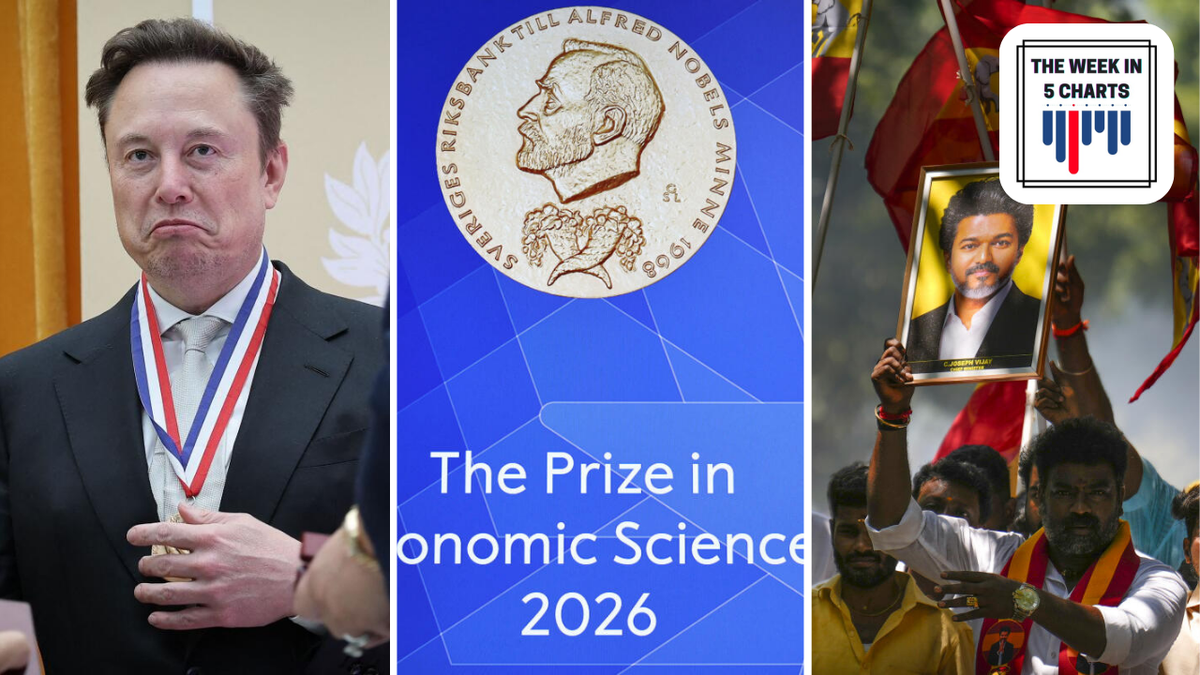
India’s political landscape, the future of satellite-based internet services and major international scientific achievements shaped several important developments during the week. Election figures offered a snapshot of regional political competition, a dispute over satellite internet approvals raised questions about regulation and market access, while the 2026 Nobel Prizes recognised advances in science, literature, peace and economics.
Viewed through data, these developments reveal how electoral choices, emerging technologies and research breakthroughs are influencing public debate in India and around the world.
By-Election Figures Highlight Regional Political Contests
By-elections provide an important measure of political sentiment between general elections. Unlike nationwide polls, these contests focus on individual constituencies, where local concerns, candidate popularity and party organisation can significantly influence the result.
The October by-election round included Assembly constituencies in Tamil Nadu, West Bengal and Puducherry, alongside a parliamentary contest in Assam. The different locations offered an opportunity to examine how political parties perform across states with distinct electoral histories and political priorities.
Such results need to be interpreted carefully. A victory in a single constituency does not necessarily indicate a wider shift in public opinion. Factors such as turnout, local alliances and the circumstances that created the vacancy can all affect the outcome.
Satellite Internet Dispute Raises Questions Over Regulation
The debate surrounding the proposed introduction of satellite broadband services in India became another major talking point. The dispute centred on delays in regulatory approvals and allegations that established commercial interests could be influencing market access.
The company seeking to introduce the service argued that satellite connectivity could expand internet access, particularly in remote areas where traditional broadband infrastructure is difficult or expensive to establish.
Indian authorities, meanwhile, maintained that satellite communication providers must satisfy the country's regulatory and security requirements. Spectrum allocation, security clearances and compliance with domestic rules remain important considerations before commercial operations can begin.
The disagreement highlights a broader challenge for policymakers: encouraging competition and technological innovation while protecting national security and ensuring consistent regulation.
Satellite broadband could offer additional connectivity options for rural communities, businesses and public services. However, its eventual impact will depend on factors including pricing, infrastructure, service reliability and the terms under which companies are permitted to operate.
Nobel Prizes Recognise Breakthroughs Across Disciplines
The 2026 Nobel Prize announcements brought attention to research and creative work spanning medicine, physics, chemistry, literature, peace and economics.
In medicine, Karl Deisseroth, Peter Hegemann and Georg Nagel were recognised for pioneering work on optogenetics, a technique that uses light to control activity in genetically modified cells. The research has helped scientists investigate how brain cells function.
The physics prize went to Francis Halzen for contributions to the IceCube Neutrino Observatory and the discovery of high-energy neutrinos originating from astrophysical sources. The work has expanded scientists’ ability to investigate distant and energetic processes in the universe.
Chemistry laureates Henri B. Kagan and Kenso Soai were honoured for research into reactions involving mirror-image molecules, an area relevant to chemical synthesis and pharmaceutical development.
Canadian writer Anne Carson received the literature prize. Navi Pillay, a former United Nations human rights chief, was awarded the Peace Prize for her work promoting international law. The economics award went to Robert E. Hall and Michael Woodford for research into economic fluctuations and policy.
What the Week’s Data Reveals
Together, these developments demonstrate how data can connect seemingly unrelated stories. Election figures help explain political competition, regulatory disputes reveal the challenges of introducing new technologies, and Nobel announcements show how sustained research can reshape scientific understanding.
The broader lesson is that numbers become most useful when placed in context. Whether assessing voting patterns, evaluating a new communications service or understanding scientific recognition, reliable interpretation requires more than headline figures alone.
Related Stories


Reader comments are moderated as per Daily News Axis editorial standards.










