
Pakistan Imposes Emergency Rule in Khyber Pakhtunkhwa Amid Political and Military Tensions
Pakistan has imposed emergency rule in Khyber Pakhtunkhwa, suspending the provincial government led by former Prime Minister Imran Khan’s Pakistan Teh...
Pakistan has imposed emergency rule in Khyber Pakhtunkhwa, suspending the provincial government led by former Prime Minister Imran Khan’s Pakistan Tehreek-e-Insaf (PTI) party and transferring key administrative powers to federal authorities. The decision, approved by President Asif Ali Zardari on October 11, 2026, has intensified concerns over provincial autonomy, democratic governance and the military’s influence in Pakistan’s political affairs.
The federal government has justified the move by citing worsening security conditions and alleged failures by the provincial administration to cooperate effectively in counterterrorism efforts. PTI has rejected the action, arguing that the emergency undermines its elected government and represents an attempt to weaken the opposition.
The development comes amid a broader confrontation between the federal government and Khan’s supporters, who have been organising protests demanding his release from prison.
Federal Government Takes Control of Provincial Administration
The emergency was declared under Articles 232 and 234 of Pakistan’s Constitution, which provide for emergency measures and governor’s rule under specified circumstances. Under the new arrangement, the provincial cabinet led by Chief Minister Sohail Afridi has ceased to function, with the governor assuming responsibility for running the province alongside an 11-member advisory council.
The federal government says the intervention is necessary to address security challenges and restore effective administration. Officials have pointed to militant violence in the province, which shares a border with Afghanistan, as a central reason for the decision.
The arrangement is initially expected to remain in place for six months. Federal authorities have also announced additional administrative measures affecting districts in the province.
PTI Rejects Emergency as Political Pressure Mounts
PTI has described the federal intervention as an attack on democratic representation and provincial self-government. The party disputes the federal government’s account of its counterterrorism record and argues that Islamabad has not provided adequate resources for the province to respond to security threats. Differences over military operations and the handling of militancy had already strained relations between the two administrations.
The timing has added to the political sensitivity. PTI supporters have been preparing a march towards Islamabad to demand Khan’s release, while authorities have increased security and placed barriers on routes into the capital. Reports of detentions involving party activists and senior figures have further heightened tensions.
What Role Does Asim Munir Play?
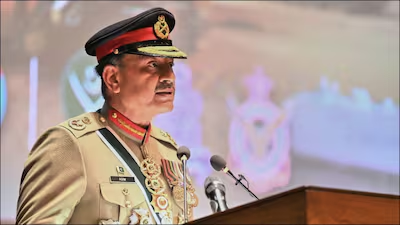
Army chief Asim Munir is central to Pakistan’s wider civil-military landscape, as the military remains an influential institution in national security and political affairs. PTI has repeatedly accused the military establishment of exerting excessive influence over politics, allegations the military has denied. The current emergency has renewed debate about the balance of power between elected provincial leaders, the federal government and security institutions.
However, the publicly reported legal basis for the emergency is the federal government’s stated concern over security and provincial governance. The available official announcements do not establish that the move is part of a personal plan by Munir to secure absolute military control. Such claims should be distinguished from confirmed decisions and documented statements.
Constitutional and Political Questions Ahead
The use of emergency provisions gives the federal government expanded authority, but the arrangement also raises questions about parliamentary oversight, provincial autonomy and the duration of federal intervention. The six-month period announced by officials provides an initial framework, while the political dispute over the decision is likely to continue.
For Khyber Pakhtunkhwa, the immediate test will be whether the new administration can improve security while maintaining public services and political stability. For Pakistan nationally, the confrontation risks deepening an already serious divide between the ruling coalition and Khan’s party.
The emergency has therefore become more than a provincial administrative change. Its consequences will depend on how the federal authorities exercise their powers, whether PTI can challenge the decision through political and constitutional channels, and whether the competing sides can prevent the dispute from escalating further.
Related Stories


Reader comments are moderated as per Daily News Axis editorial standards.










