
Pakistan Warns of 22% Water Shortage as Indus Waters Treaty Remains Suspended
Pakistan is anticipating a significant water shortage during the current season, with projections indicating a deficit of around 22% as the suspension...
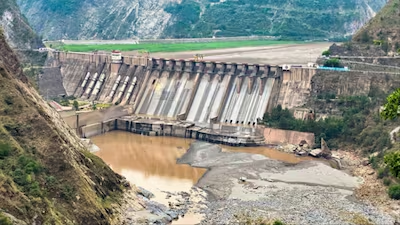
Pakistan is anticipating a significant water shortage during the current season, with projections indicating a deficit of around 22% as the suspension of the Indus Waters Treaty continues to shape relations with India. The expected shortfall has raised concerns about water availability for agriculture and other essential needs, particularly as the country manages pressure on its already limited water resources.
The projected deficit comes amid continuing tensions between the two neighbouring countries over the management and sharing of river waters. The Indus river system is a critical source of water for Pakistan, supporting irrigation, food production and several other economic activities.
With the treaty on hold, uncertainty over future water cooperation has become an additional concern for Pakistani authorities. The anticipated shortage also highlights the importance of seasonal water assessments, reservoir management and planning for the needs of farmers and other consumers.
Pakistan Faces Water Allocation Cuts During Rabi Season
The Indus River System Authority (IRSA) has approved a 22% reduction in water availability for Punjab and Sindh during Pakistan’s Rabi season, which runs from October through March. The authority estimates that total water availability will reach 29.18 million acre-feet, compared with approximately 38 million acre-feet envisaged under the 1991 Water Accord.
The decision comes as Pakistan prepares for the winter cropping cycle, when farmers depend on irrigation to cultivate wheat and other seasonal crops. Any reduction in water supplies could complicate agricultural planning, particularly in areas where farming relies heavily on canal irrigation.
The approved allocations reflect projected river inflows, expected conveyance losses and the amount of water available across the irrigation system. Authorities may review the estimates as the season progresses and actual conditions become clearer.
Delays in Water Infrastructure Add to Concerns
Water availability has also been affected by delays in major infrastructure projects, including work associated with the Tarbela reservoir system. Such delays can limit the ability to store and manage water efficiently, increasing pressure on the distribution system when supplies fall below projected requirements.
Pakistan's water managers must balance the needs of different provinces while accounting for seasonal changes in river flows. The latest allocation decision places particular pressure on Punjab and Sindh, the two provinces facing the approved reductions.
Balochistan and Khyber Pakhtunkhwa have been exempted from the cuts under the distribution formula currently being applied. This arrangement reflects the existing approach to allocating shortages among the provinces rather than imposing identical reductions across the country.
Indus Waters Treaty Dispute Adds a Geopolitical Dimension
The water shortage has emerged against the backdrop of deteriorating relations between India and Pakistan over the Indus Waters Treaty, the agreement governing the use of shared river resources since 1960.
India announced in April 2025 that it was placing the treaty in abeyance following the Pahalgam terror attack. Pakistan has opposed the decision, arguing that the agreement cannot be suspended unilaterally.
In August 2026, a Court of Arbitration based in The Hague ruled that the treaty remained in force and that its provisions did not permit either party to suspend it unilaterally. India rejected the tribunal's authority and said it did not accept the ruling. The disagreement has added another layer of uncertainty to an already sensitive bilateral relationship.
However, Pakistan's immediate 22% water shortfall is linked to the seasonal availability estimates approved by its water regulator. The treaty dispute forms part of the wider political context, but the projected deficit should not be treated as evidence that the suspension itself directly caused the shortage.
Wheat Production and Food Security in Focus
Wheat is the principal crop of Pakistan's Rabi season, making irrigation availability particularly important during the coming months. Reduced supplies could force farmers and provincial authorities to make difficult decisions about water distribution and agricultural priorities.
The ultimate effect on production will depend on rainfall, river inflows, reservoir conditions and how effectively the available water is distributed. A projected shortage does not automatically translate into an equivalent decline in crop output, but it increases the importance of careful planning.
As the Rabi season advances, updated assessments of river flows and reservoir levels will help determine whether the current allocation estimates need to be revised. For Pakistan, managing the shortage will require coordination between federal and provincial authorities while the broader dispute over shared water resources remains unresolved.
Related Stories


Reader comments are moderated as per Daily News Axis editorial standards.










