
Is the Air Inside Your Home Really Safe? Understanding AQI, Indoor Air Pollution and the Role of Fresh-Air Systems
As air pollution becomes an increasing concern across Indian cities, experts highlight why monitoring indoor air quality and adopting effective ventil...
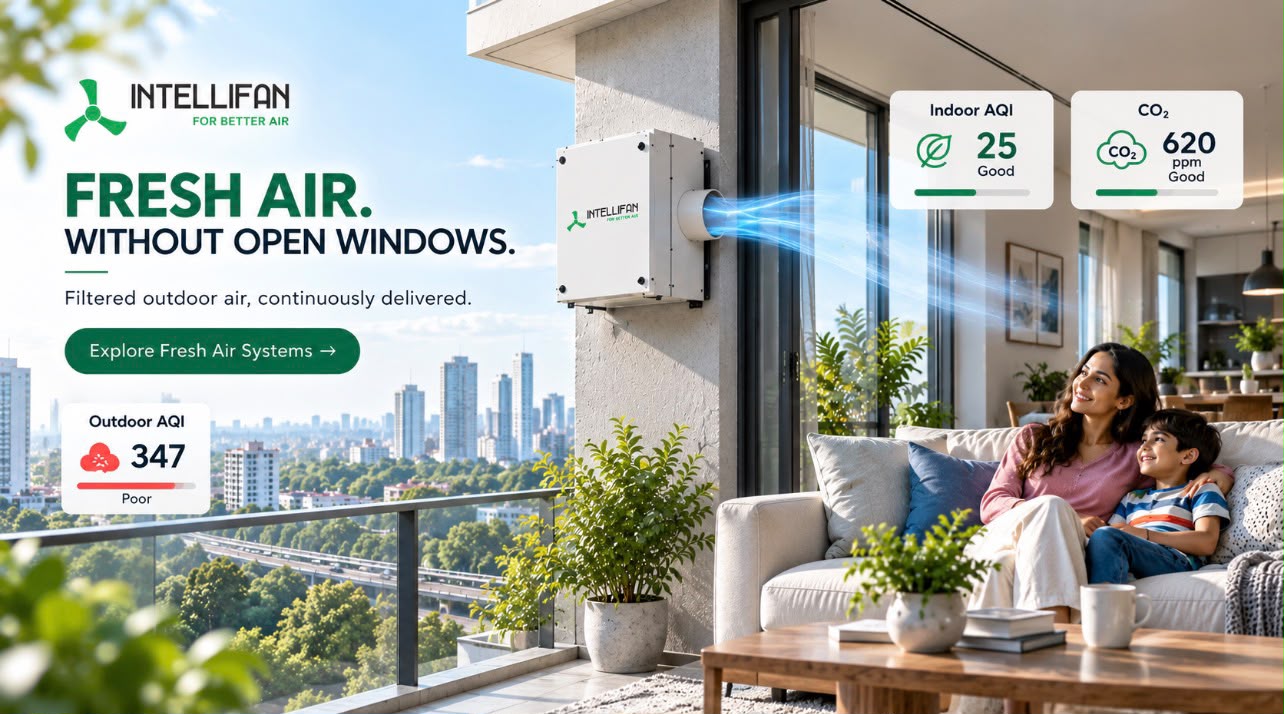
As air pollution becomes an increasing concern across Indian cities, experts highlight why monitoring indoor air quality and adopting effective ventilation solutions are becoming important considerations for healthier living.
With rising air pollution levels across several Indian cities, concerns about respiratory health and everyday exposure to pollutants are increasingly influencing how people think about their living environments. While outdoor air pollution often dominates conversations, an equally important question deserves attention: Is the air inside our homes as clean as we assume it to be?
Many people believe that staying indoors, shutting windows and limiting outdoor exposure are sufficient ways to protect themselves from pollution. However, indoor air quality can also be affected by outdoor pollutants entering through doors, windows and ventilation gaps, along with everyday activities such as cooking, cleaning, the use of household products and inadequate ventilation.
This makes indoor air quality an important aspect of creating healthier homes, particularly during periods of elevated outdoor pollution.
Understanding Air Quality Index (AQI): What Do the Numbers Actually Mean?
The Air Quality Index (AQI) is a numerical indicator that helps people understand the quality of the air around them. In India, the Central Pollution Control Board (CPCB) classifies air quality into six categories based on the concentration of major pollutants, including PM2.5, PM10, nitrogen dioxide, sulphur dioxide and other pollutants.
Understanding these categories can help people make more informed decisions about their daily activities and exposure to polluted environments.
AQI Levels and What They Mean
| AQI Range | Air Quality | Possible Health Impact |
| 0–50 | Good | Minimal health impact |
| 51–100 | Satisfactory | Minor breathing discomfort may occur in sensitive individuals |
| 101–200 | Moderate | Breathing discomfort may affect people with lung or heart conditions, children and older adults |
| 201–300 | Poor | Breathing discomfort may occur in many people, particularly with prolonged exposure |
| 301–400 | Very Poor | Increased risk of respiratory illness with prolonged exposure |
| 401–500 | Severe | Respiratory effects may occur even in healthy individuals; serious impacts are possible for people with existing conditions |
Source: Central Pollution Control Board (CPCB), India's National Air Quality Index.
The AQI scale demonstrates why air quality should not be treated as a seasonal concern alone. Regular awareness of pollution levels can help individuals understand potential exposure risks and take appropriate precautions.
Why Indoor Air Quality (IAQ) Deserves Equal Attention
An important misconception about air pollution is that indoor spaces are automatically protected from outdoor pollutants.
In reality, particulate matter and other pollutants can enter homes through openings, ventilation systems and regular movement between indoor and outdoor spaces. Additionally, indoor activities can introduce pollutants that affect the overall air quality.
Poor ventilation can further contribute to the accumulation of indoor pollutants, moisture and stale air.
For households, offices, schools and other enclosed environments, maintaining an appropriate balance between ventilation and filtration is therefore important.
Simply keeping windows closed may limit the entry of some outdoor pollutants, but it can also restrict fresh-air circulation. The challenge is to introduce adequately filtered fresh air while removing stale indoor air.
How Does Bad Indoor Air Affect Our Health and Daily Life?
Poor Indoor Air Quality (IAQ) can affect more than just our breathing. Exposure to indoor pollutants such as PM2.5, dust, VOCs and inadequate ventilation can contribute to respiratory irritation, allergies, headaches, fatigue and discomfort.
Elevated CO₂ levels can also indicate insufficient ventilation and may affect concentration and cognitive performance. Over time, prolonged exposure to certain indoor pollutants has been linked to respiratory and cardiovascular health risks. The air we breathe indoors matters—not just for our health, but also for how we feel, think and perform every day.
Air Quality Monitoring: The First Step Towards Better Indoor Air
One of the most practical ways to become more aware of indoor environmental conditions is through an air quality monitoring device.
Air quality monitors help track important indoor air parameters, such as particulate matter and co2 levels, depending on the device's specifications. This information can help occupants understand changes in indoor air conditions and identify situations where ventilation or filtration may need attention.
Rather than relying entirely on outdoor AQI readings, monitoring indoor air provides another layer of awareness about the environment in which people spend much of their time.
It is important to understand that indoor monitoring readings and the official CPCB outdoor AQI are not necessarily interchangeable. They may use different measurement methods and pollutant parameters.
With increasing awareness about indoor pollution, air quality monitoring is becoming a useful consideration for modern homes and workplaces.
How Fresh-Air Systems Help to Improve Indoor Air Quality?
Monitoring air quality is an important first step, but understanding the problem also requires looking at possible solutions.
Fresh-air ventilation systems are designed to introduce outdoor air into indoor spaces through a controlled ventilation process. Equipped with multi stage filtration, these systems can help reduce the entry of airborne particulate pollutants while supporting continuous air circulation.
Unlike conventional fans that primarily circulate existing indoor air, fresh-air ventilation systems bring in outdoor air, while ventilation arrangements can also help remove stale indoor air.
Properly designed, installed and timely maintained systems support:
- Filtered fresh-air supply: Introducing outdoor air through appropriate filtration to help reduce particulate matter entering indoor spaces.
- Removal of stale air: Supporting the replacement of stale indoor air with fresh, filtered air.
- Improved oxygen levels: more fresh air leads to dilution of co2 and improved oxygen level
- Reduced indoor pollution : continuous filtered air leads to positive air pressure, pushing out stale air through gaps while diluting the particulate matter and other pollutant levels.
Energy Recovery Ventilators (ERVs) can further support controlled ventilation by transferring energy between incoming and outgoing air streams, helping manage energy use while maintaining fresh-air circulation.
However, the effectiveness of any ventilation system depends on factors such as room size, airflow requirements, filter efficiency, outdoor pollution levels and regular maintenance.
INTELLIFAN: Bringing Air Monitoring and Fresh-Air Solutions Together
As awareness of indoor air pollution grows, INTELLIFAN is contributing to the conversation around better indoor air management through its ventilation and air quality solutions.
Its product portfolio includes air quality monitoring devices, fresh-air ventilation systems, Energy Recovery Ventilators (ERVs), inline duct fans and other ventilation solutions for residential and commercial environments.
By combining air quality monitoring with fresh-air ventilation technologies, INTELLIFAN addresses two important aspects of indoor air management: understanding existing air conditions and supporting better ventilation.
These solutions are relevant for modern homes, offices, schools, gyms and other enclosed spaces where maintaining appropriate indoor air quality is important.
The Future of Healthy Living Begins with the Air We Breathe
As concerns around air pollution continue to grow, ensuring better indoor air quality is becoming an important part of healthier living. With people spending a considerable amount of time indoors, understanding the air they breathe is just as important as being aware of outdoor pollution.
Monitoring indoor air quality, maintaining proper ventilation and adopting suitable filtration solutions can help create healthier and more comfortable indoor environments. The focus should go beyond simply keeping polluted air out and move towards ensuring a consistent supply of appropriately filtered fresh air.
Ultimately, creating healthier homes begins with a simple step: paying attention to the quality of the air we breathe every day.
Related Stories


Reader comments are moderated as per Daily News Axis editorial standards.