Bombay High Court Warns Mumbai Against Delhi-Like Pollution, Calls for Stronger Action
The Bombay High Court has intensified its scrutiny of Mumbai’s deteriorating air quality, warning that the city must take stronger measures to prevent...
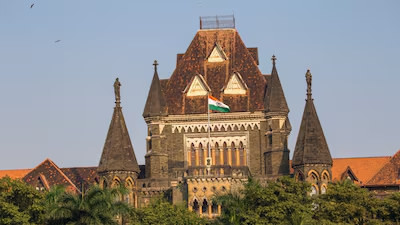
The Bombay High Court has intensified its scrutiny of Mumbai’s deteriorating air quality, warning that the city must take stronger measures to prevent pollution from reaching levels associated with Delhi. The court has raised concerns over construction dust, vehicle emissions, firecrackers and noise pollution, questioning whether government agencies are doing enough to enforce existing regulations.
The warning comes as Mumbai prepares for the winter months, when air quality can worsen and pollution becomes a growing public health concern. The court has called for more effective monitoring and coordinated action from the Maharashtra government and civic authorities.
Mumbai’s Air Quality Raises Serious Concerns
During a hearing on October 21, a bench comprising Justices Girish S Kulkarni and Neela K Gokhale expressed concern that Mumbai had recorded pollution levels exceeding those in Delhi.
The judges described the situation as shocking, particularly given Mumbai’s coastal location, sea breezes and open spaces. The observations formed part of ongoing judicial proceedings concerning deteriorating air quality across the Mumbai Metropolitan Region.
The High Court has been monitoring the issue since November 2023, when it initiated proceedings on its own after concerns emerged about the city’s worsening pollution.
The court has repeatedly questioned the effectiveness of measures adopted by the Brihanmumbai Municipal Corporation (BMC) and other authorities, stressing that protecting residents from pollution is a public responsibility rather than a discretionary exercise.
Construction Dust and Road Pollution Under the Scanner
Road dust and construction activity have emerged as major areas of concern in the court’s proceedings.
A high-powered committee established by the High Court identified dust generated by vehicles travelling along unpaved highway shoulders as a critical problem across the Mumbai Metropolitan Region.
In its September 29 report, the committee recommended identifying vulnerable highway stretches and paving or stabilising their shoulders to reduce dust emissions. It also proposed regular road washing and restrictions on heavy-vehicle parking in areas where paving was not feasible.
The panel further recommended withholding demolition and redevelopment permissions until developers submitted comprehensive plans for managing and disposing of construction and demolition waste.
These measures are intended to address pollution at its source rather than relying exclusively on temporary interventions when air quality deteriorates.
Court Takes a Firm Stand on Firecrackers
Firecracker use has also drawn strong criticism from the High Court, particularly during major festivals.
In September and October, a bench led by Justice Kulkarni issued directions restricting firecracker use on public streets across Maharashtra. The court warned that uncontrolled pollution could turn Mumbai into a gas chamber and questioned the authorities’ claims that the situation was under control.
The judges also emphasised stricter monitoring of noise levels at public celebrations. Directions included requirements for organisers to display permissions, install visible decibel meters, use sound limiters and provide security deposits.
During a November 19 hearing, the court expressed displeasure over poor air quality during Diwali and criticised people who continued bursting firecrackers despite restrictions. It indicated that a complete ban was among the measures under consideration.
The proceedings have highlighted concerns about whether existing rules are being enforced effectively on the ground.
Construction Noise and Laser Lights Also Face Scrutiny
The High Court’s environmental concerns extend beyond air pollution.
On November 4, a bench comprising Chief Justice Mahesh Chandra Tripathi and Justice Advait M Sethna heard a petition by a Mahim resident who complained about excessive noise from construction work.
Police records submitted during the proceedings reportedly recorded noise levels exceeding 100 decibels at construction sites, far above the permissible daytime limit of 55 decibels for residential areas.
The court said authorities had a responsibility to monitor and enforce noise regulations, describing construction-related noise pollution as a serious problem in a city experiencing extensive redevelopment.
The court has also directed authorities to prohibit high-intensity laser lights and beams during religious and public processions, citing concerns about their excessive impact.
Authorities Face Pressure to Deliver Results
The High Court’s repeated interventions reflect growing concern that pollution-control measures have not delivered adequate results.
The court has sought expert assessments, closer monitoring and better coordination among government departments, municipal bodies and enforcement agencies. It has also stressed that scientific studies are necessary to identify the sources of pollution and determine which interventions will be most effective.
Its warning against Mumbai becoming like Delhi reflects a broader concern about the consequences of allowing air quality to deteriorate without sustained action.
As the city approaches winter, the challenge for authorities will be to translate judicial directions into effective implementation, reduce emissions from construction and transport, and ensure that pollution regulations are followed consistently.
The continuing proceedings place renewed focus on whether Mumbai can protect its residents’ health through long-term environmental planning rather than relying on emergency responses after pollution levels rise.
Related Stories
Reader comments are moderated as per Daily News Axis editorial standards.