Netanyahu and Gadi Eisenkot Explore Unity Government as Israel Faces Political Deadlock
Israel’s efforts to form a new government have entered a crucial phase as caretaker Prime Minister Benjamin Netanyahu’s Likud party and opposition lea...
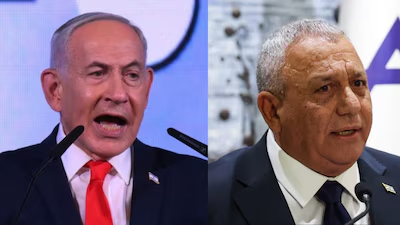
Israel’s efforts to form a new government have entered a crucial phase as caretaker Prime Minister Benjamin Netanyahu’s Likud party and opposition leader Gadi Eisenkot’s Yashar party explore the possibility of a national unity coalition. However, major disagreements over leadership, the role of far-right politicians and key policy issues have left the negotiations without a breakthrough.
The discussions took on renewed importance after Sunday’s meeting on November 22, 2026, ended without an agreement. Both sides agreed to continue talks, with another meeting scheduled for Monday as political pressure mounts on Eisenkot to decide how he intends to assemble a governing majority.
Why Are Netanyahu and Eisenkot Considering a Unity Government?
Israel’s October 2026 election failed to produce a clear parliamentary majority, leaving competing political blocs struggling to form a government.
Eisenkot, a former military chief who leads the centrist Yashar party, has been given the first opportunity to form the next administration. President Isaac Herzog has set December 6 as the deadline, with a possible extension of 14 days.
Eisenkot’s bloc commands 48 seats, short of the 61 required for a majority in the 120-member Knesset. This has forced his camp to consider several options, including a broader coalition involving Likud, cooperation with ultra-Orthodox parties or a minority government supported by other parliamentary groups.
Netanyahu, meanwhile, is seeking a national unity arrangement that could allow Likud to remain part of the next government. A power-sharing agreement between the two leaders has emerged as one possibility, although it remains far from settled.
Sunday Negotiations End Without a Breakthrough
Representatives of Likud and Yashar met for around four hours in Herzliya on Sunday. The discussions covered several substantive issues, but the parties did not resolve their central differences.
Their joint statement confirmed that positions had been presented and discussed, adding that another meeting would take place.
The negotiations are expected to continue as both camps attempt to determine whether a workable political arrangement is possible. However, the lack of progress on fundamental questions suggests that forming a unity government could prove difficult.
The disagreement is not simply about distributing ministerial positions. The two parties also differ on the future direction of government policy, judicial reform, military conscription and how Israel should investigate the security failures surrounding the Hamas-led attacks of October 7, 2023.
Itamar Ben-Gvir’s Role Emerges as a Major Obstacle
One of the most contentious issues is whether National Security Minister Itamar Ben-Gvir and his far-right Otzma Yehudit party would be included in a potential unity government.
Eisenkot’s camp has reportedly insisted that Ben-Gvir should be excluded. Likud, however, has not agreed to that demand, creating a significant obstacle to an arrangement between the parties.
The disagreement reflects broader differences over the composition and political character of the next administration. Eisenkot would need to reassure supporters who oppose cooperation with the far right, while Netanyahu must consider the position of his existing political allies.
Without a compromise on this question, the prospects for a broad-based unity government could remain limited.
Judicial Reform and the October 7 Investigation
The future of Israel’s judicial system is another important point of disagreement.
Likud and Yashar have differing positions on judicial reform, an issue that has generated deep political divisions in the country. The negotiations have also involved discussions about establishing a commission of inquiry into the October 7 attacks.
Eisenkot and his allies have called for an independent investigation into the security and intelligence failures preceding the attacks. Netanyahu’s government has resisted that approach, favouring a different mechanism for appointing the inquiry’s members.
The question is politically sensitive because the investigation could examine decisions made by senior officials before and during the attacks. Any agreement on a future government may therefore require a compromise over how accountability is pursued.
Military Conscription Adds to Coalition Challenges
Military service for ultra-Orthodox Jewish men is another issue that could shape the negotiations.
Eisenkot has advocated changes to arrangements that have allowed many ultra-Orthodox men studying in religious seminaries to avoid compulsory military service. Some ultra-Orthodox parties, however, want to preserve exemptions or secure legal protections for their communities.
This creates a difficult balancing act for Eisenkot. Bringing ultra-Orthodox parties into his coalition could help him reach a parliamentary majority, but doing so may conflict with commitments he made during the election campaign.
At the same time, Netanyahu’s political camp has its own interests in maintaining relationships with religious parties, making the issue relevant to both coalition-building efforts and the unity negotiations.
What Happens Next for Israel?
Eisenkot faces several possible paths. He could continue negotiations with Likud, pursue an alternative coalition involving ultra-Orthodox parties, or attempt to form a minority government that receives parliamentary support from outside the cabinet.
Former prime minister Naftali Bennett has backed the idea of a unity government led by Eisenkot, adding another dimension to discussions about possible power-sharing arrangements. However, political support for the concept has not yet translated into a workable agreement.
The coming days will be important as Eisenkot approaches the deadline for forming a government. If negotiations fail, the country could face further political uncertainty, including the possibility that another leader receives an opportunity to form a government or that new elections eventually become necessary.
For now, the talks remain unresolved. The outcome will depend on whether the rival camps can overcome their differences on leadership, judicial reform, military service and the participation of far-right parties in the next administration.
Related Stories
Reader comments are moderated as per Daily News Axis editorial standards.