Delhi Traffic Advisory Issued Ahead of CJP’s Tiranga March; Abhijeet Dipke Detained
Delhi Police detained Abhijeet Dipke, founder of the Cockroach Janta Party (CJP), on October 16 ahead of the group’s proposed “Lehra Do Tiranga” demon...
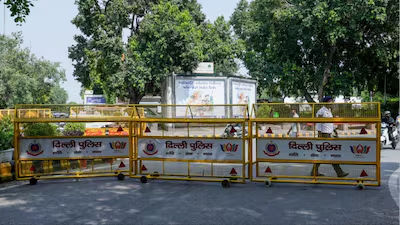
Delhi Police detained Abhijeet Dipke, founder of the Cockroach Janta Party (CJP), on October 16 ahead of the group’s proposed “Lehra Do Tiranga” demonstration at Connaught Place. The planned gathering prompted heightened security arrangements across central Delhi, with authorities citing concerns over public safety, traffic disruption and compliance with restrictions on public assemblies.
The demonstration was scheduled for 5 pm at Central Park in Connaught Place. CJP had called on supporters to gather with the national flag in protest against the detention of two party members and to demand the resignation of Chief Election Commissioner Gyanesh Kumar over alleged irregularities in electoral-roll revision.
Police had warned Dipke against proceeding without official permission. The New Delhi Municipal Council also announced that Central Park would remain closed to the public on October 16 and 17, citing administrative reasons.
Why Delhi Police Detained Abhijeet Dipke
Before the planned demonstration, police officials visited Dipke and served him a notice prohibiting the proposed gathering at Central Park. Authorities said restrictions under Section 163 of the Bharatiya Nagarik Suraksha Sanhita were in force in the area.
Police raised concerns that an unauthorised crowd could affect commuters, traders and other visitors to Connaught Place. The notice also referred to potential public-order and safety problems if a large gathering proceeded despite the restrictions.
Dipke had maintained that the event was intended to be peaceful and that displaying the national flag should not be treated as a criminal act. He had also alleged that he was being monitored before the demonstration. Those surveillance claims were not independently established.
The detention came hours before the scheduled event, leaving uncertainty over whether the party’s supporters would attempt to assemble at the proposed venue.
Traffic Restrictions and Security Preparations
Connaught Place is one of Delhi’s busiest commercial and transport hubs, connecting offices, shops, restaurants and major Metro services. A large demonstration in the area could affect vehicle movement and pedestrian access, particularly during busy afternoon and evening hours.
Police prepared additional security arrangements around Central Park and nearby locations. Traffic diversions and restrictions were expected to be used where necessary to manage crowds and maintain movement through central Delhi.
Authorities urged commuters to remain alert to local traffic instructions and follow directions from police personnel. Travellers passing through Connaught Place were likely to face additional checks or delays depending on how the security situation developed.
The park’s temporary closure also affected access to the central public space. Officials did not indicate that the closure itself amounted to a blanket restriction on all activity throughout Connaught Place.
Protest Linked to Detention of CJP Members
The proposed march followed action against CJP members Saurav Das and Ashutosh Ranka, who were sent to judicial custody after an earlier protest at Jantar Mantar.
The party said the new demonstration was intended to express solidarity with the detained members. It also sought to draw attention to the Special Intensive Revision of electoral rolls, a process that has become a point of political disagreement.
CJP and some opposition-linked activists have alleged that changes to voter lists risk excluding eligible voters. The Election Commission has defended the revision process, while those raising concerns have called for greater transparency and accountability.
The allegations of deliberate bias remain disputed, and the political controversy has continued alongside questions about the rules governing public demonstrations in Delhi.
Courts and Authorities Face Questions Over Protest Rights
The proposed gathering also prompted legal scrutiny over the impact a demonstration could have on local traders and public movement. The Delhi High Court declined to prohibit the event through an immediate order, while police maintained that any gathering would have to comply with applicable restrictions and permissions.
The dispute highlights the challenge of balancing peaceful political expression with the need to protect public safety and keep busy commercial areas functioning.
What Happens Next?
Dipke’s detention has placed CJP’s plans under pressure, while the party’s broader campaign over electoral rolls and the treatment of its members remains unresolved.
For commuters, the immediate concern is access to Connaught Place and possible traffic disruption around the planned protest site. Further developments depend on police decisions, the response from CJP supporters and any subsequent legal proceedings.
Related Stories

Reader comments are moderated as per Daily News Axis editorial standards.