Formula 1 India Comeback: Mercedes’ Bradley Lord Backs Return as Adani Takes Over Buddh Circuit
India’s efforts to bring Formula 1 back to the country have received encouragement from Mercedes deputy team principal Bradley Lord, who believes an I...
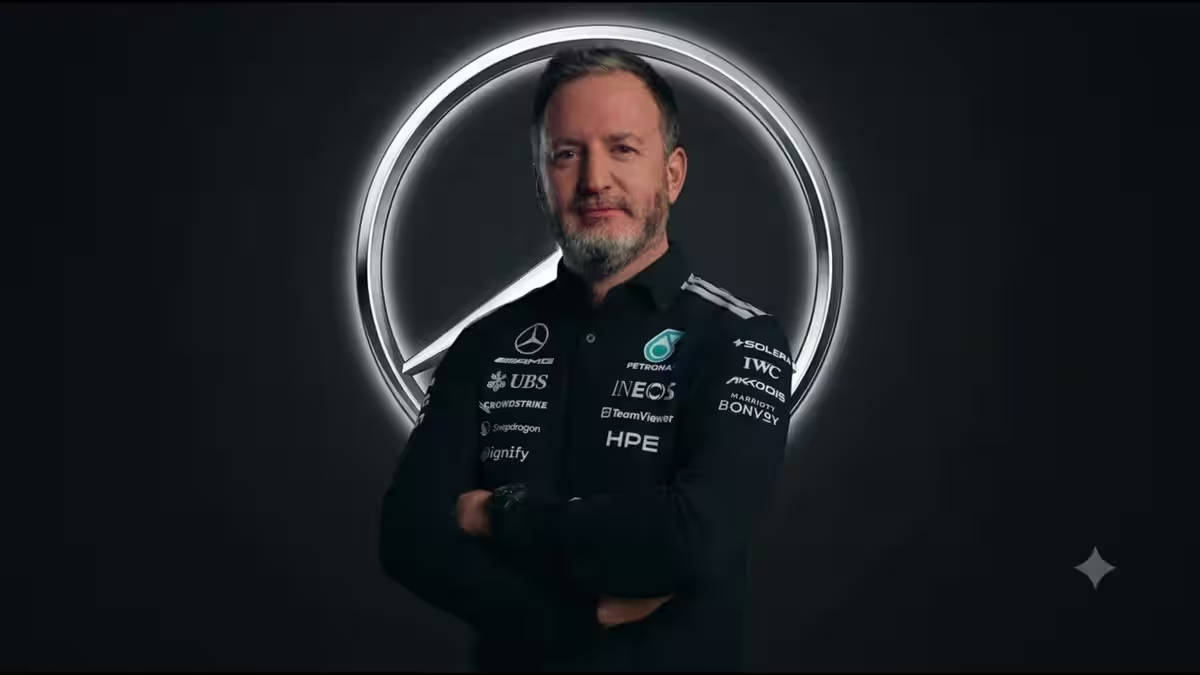
India’s efforts to bring Formula 1 back to the country have received encouragement from Mercedes deputy team principal Bradley Lord, who believes an Indian Grand Prix would be a natural addition to the global racing calendar. However, a return will depend on resolving regulatory and financial challenges, securing the right commercial arrangements and preparing the circuit for a major international event.
India last hosted a Formula 1 race in 2013 at the Buddh International Circuit in Greater Noida, Uttar Pradesh. The event ran for three seasons before disappearing from the calendar amid tax disputes and other regulatory complications.
Now, renewed government attention and a change in ownership of the circuit’s parent company have revived hopes of a comeback, with 2028 emerging as the target year for a possible return.
Why Mercedes Believes India Deserves an F1 Race
Lord has expressed support for India’s place in Formula 1, pointing to the country’s appeal as a destination and the quality of its existing racing facilities.
He also acknowledged that the difficulties involved in staging a major international sporting event contributed to the Indian Grand Prix’s departure. Resolving those issues will be essential before the championship can seriously consider returning.
Formula 1’s commercial leadership, headed by chief executive Stefano Domenicali, will ultimately determine whether a proposal meets the sport’s requirements. That decision involves more than the condition of a circuit: organisers must demonstrate financial viability, reliable partnerships and the ability to deliver an event to international standards.
India’s interest comes at a time when Formula 1 continues to attract audiences across different regions. A return could reconnect the championship with Indian fans, but enthusiasm alone will not guarantee a place on the calendar.
Adani Group’s Role in the Buddh International Circuit
The Adani Group’s acquisition of Jaiprakash Associates has added a new dimension to the comeback effort. The deal, valued at approximately $1.7 billion, or ₹14,535 crore, includes the Buddh International Circuit and the surrounding sports-city assets.
The ownership change could provide an opportunity to reconsider how the facility is managed and developed. The circuit already holds the highest FIA grade required for Formula 1, meaning that its basic certification is not the principal obstacle to a return.
Nevertheless, the venue would need to be assessed for its current condition, operational readiness and ability to support the extensive requirements of a modern Grand Prix.
Karan Adani has indicated that bringing Formula 1 back to India is a personal priority. The group’s involvement could help align ownership, investment and event planning, although the acquisition itself does not constitute confirmation of a race.
Why India Lost Formula 1 After 2013
The Indian Grand Prix debuted in 2011, with the Buddh International Circuit hosting three consecutive races. Sebastian Vettel won all three editions.
Despite the circuit receiving positive attention, the event faced disputes over taxation and regulatory treatment. Authorities classified Formula 1 under entertainment-related rules, while customs procedures for imported racing equipment added further complications for organisers.
Those difficulties made it harder to sustain the event commercially. The planned continuation of the race did not materialise, and India has remained absent from the Formula 1 calendar since 2013.
The experience remains an important lesson for any revival plan: organisers need predictable regulations, coordinated government support and a workable financial structure before committing to the substantial costs of hosting a Grand Prix.
Could Formula 1 Return to India in 2028?
The Indian government has begun working with relevant stakeholders on the regulatory, taxation and infrastructure questions surrounding a possible return. A task force has been proposed to coordinate these efforts, while the existing Buddh circuit remains central to the current plan.
The timing, however, remains uncertain. Formula 1 has not confirmed an Indian race, and its discussions about potential future venues include other countries. A Grand Prix can cost a promoter tens or even hundreds of millions of dollars once hosting fees and operational expenses are considered.
India’s prospects will therefore depend on whether the government, circuit owner and championship can agree on commercially sustainable terms.
For now, Bradley Lord’s support signals that India remains a credible destination in the eyes of people within the sport. Turning that support into an actual race will require concrete progress on the issues that ended the original event.
Related Stories

Reader comments are moderated as per Daily News Axis editorial standards.