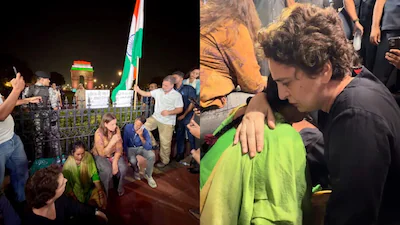
Neha Bora’s Growing Political Profile Raises Questions About Her Future Beyond Student Activism
NEW DELHI: Neha Bora, national president of the All India Students’ Association (AISA), has emerged as a prominent figure in India’s latest wave of yo...
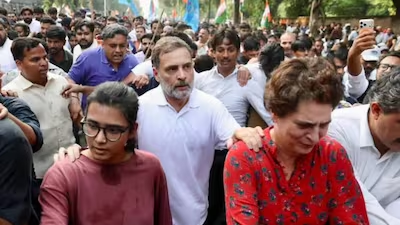
NEW DELHI: Neha Bora, national president of the All India Students’ Association (AISA), has emerged as a prominent figure in India’s latest wave of youth-led protests, bringing renewed attention to the opportunities and challenges facing student activists who enter national politics. Her growing visibility has also prompted comparisons with former student leader Kanhaiya Kumar, whose rise from campus politics to the national stage offers a useful perspective on the difficulties of sustaining political momentum.
Bora has drawn public attention through demonstrations demanding accountability from Chief Election Commissioner Gyanesh Kumar over alleged irregularities in the Special Intensive Revision (SIR) of electoral rolls. The controversy has brought student organisations, opposition parties and other activists into a broader debate about voting rights, electoral transparency and the right to protest.
The allegations surrounding the voter-roll revision remain contested. The political dispute has nevertheless helped bring Bora and the organisations involved in the demonstrations into the national spotlight.
From Student Organising to National Recognition
Bora’s growing profile reflects how student activism can provide a platform for raising wider political and social concerns. As AISA president, she has participated in demonstrations and campaigns involving education, unemployment, civil liberties and electoral accountability.
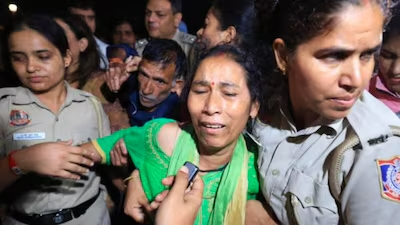
Her recent involvement in protests against the Election Commission has expanded her public visibility beyond traditional campus politics. Videos of her speeches and encounters with police have circulated online, introducing her to audiences who may not previously have followed student organisations.
However, visibility is only one part of building a lasting political presence. Maintaining public interest requires activists to communicate clear objectives, establish organisational support and demonstrate how their demands can translate into practical outcomes.
The Kanhaiya Kumar Comparison
Kanhaiya Kumar’s political journey illustrates both the possibilities and limitations of a rise through student movements. He became nationally known during his tenure as president of the Jawaharlal Nehru University Students’ Union in 2016, following a controversy that generated intense political debate.
Kumar subsequently entered electoral politics and joined the Indian National Congress in 2021 after leaving the Communist Party of India. He contested the 2019 Lok Sabha election from Begusarai in Bihar and later the 2024 election from North East Delhi, losing both contests.
His experience demonstrates that media attention and recognition among politically engaged audiences do not automatically translate into electoral success. Moving from student leadership to a broader political role can require a different approach to coalition-building, constituency outreach and voter engagement.
For Bora, comparisons with Kumar provide context rather than a prediction of her future. Their political circumstances, organisational networks and individual strategies are different, and her long-term trajectory remains uncertain.
The Challenge of Turning Protest Into Political Influence
For emerging activists, one of the central challenges is sustaining public engagement after a protest movement's initial momentum fades. Demonstrations can attract attention to an issue, but building lasting influence often depends on maintaining local networks, developing policy proposals and engaging with people beyond an activist base.
Bora's role in the current agitation has placed her at the intersection of student politics and a wider opposition campaign. Her public profile may create opportunities to expand her reach, but it also brings scrutiny over the movement's objectives, methods and political relationships.
Another consideration is whether a protest-led platform can maintain its identity while working alongside established political parties. Cooperation can broaden a movement's reach, but it may also raise questions about independence and who ultimately sets its agenda.
Electoral Politics Remains a Separate Test
The transition from activism to electoral politics is rarely straightforward. A leader who commands attention at demonstrations may still need to build support across different communities, address local concerns and establish a credible political programme before contesting an election.
Kumar's experience offers one example of this distinction. His national recognition as a student leader did not guarantee victory in parliamentary elections. At the same time, electoral setbacks alone do not determine the wider influence a politician may have through campaigning, public debate or party organisation.
Bora has not established a comparable electoral record, making it premature to assess her future through the same framework. Her immediate role remains centred on student organising and the ongoing campaign over electoral accountability.
What Lies Ahead for Neha Bora?
Bora's growing prominence highlights the capacity of student movements to bring new voices into national political conversations. Whether that attention develops into a sustained political career will depend on her future choices, the strength of her organisation and the direction of the wider movement.
For now, the immediate focus remains on the demands surrounding the SIR exercise and the controversy over protest restrictions in Delhi. The longer-term question is whether the current mobilisation can produce durable organisational and political influence beyond the demonstrations themselves.
Related Stories

Reader comments are moderated as per Daily News Axis editorial standards.