Katie Zacharia’s White House Tenure Ends After Five Days Amid Questions Over Legal Credentials
Katie Zacharia’s brief tenure as White House press secretary came to an abrupt end in October 2026, just days after she took up one of the most promin...
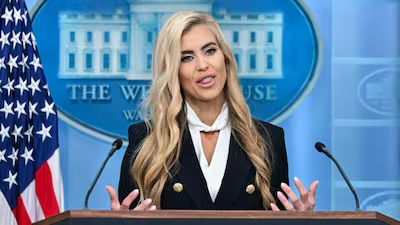
Katie Zacharia’s brief tenure as White House press secretary came to an abrupt end in October 2026, just days after she took up one of the most prominent communications roles in the US government. Her departure followed criticism of her first press briefing, questions about her legal qualifications and a series of media interviews that failed to settle the controversy.
A Rapid Rise and an Abrupt Exit
President Donald Trump announced Zacharia’s appointment on October 9, choosing her to succeed Karoline Leavitt. She began work the following week and held her first White House press briefing on October 13. By October 16, officials said she was leaving the position, making her tenure one of the shortest in the office’s history.
Trump told reporters that he had advised Zacharia to reconsider the job, saying the media scrutiny had been unusually harsh. He said he wanted her to be happy and suggested the role might not be right for her. While reports described her as being pushed out, Trump publicly framed the decision as one she could reconsider.
First Briefing Draws Immediate Criticism
Zacharia’s debut at the White House briefing room podium lasted approximately 14 minutes, during which she answered questions from only three reporters. Her delivery and handling of questions attracted criticism, with observers questioning whether she had been adequately prepared for the demands of the position.
The press secretary serves as a central public representative of the president, regularly explaining administration policies, responding to journalists and addressing controversies. The short briefing and the reaction that followed placed Zacharia under pressure almost immediately after her appointment.
Zacharia later defended her performance in a television interview, saying she had received limited preparation time and had done her best under the circumstances. She did not conduct another formal briefing before her departure was announced.
Legal Credentials Become a Major Issue
Questions about Zacharia’s professional background became a second major challenge. Trump had described her as an attorney when announcing the appointment. Zacharia graduated from Pepperdine University’s law school and had previously discussed legal matters in media appearances, including claims about work connected with international law in China.
However, scrutiny intensified when it emerged that she had not passed the California bar examination and was not licensed to practise law in any US state or the District of Columbia. In a subsequent television interview, Zacharia acknowledged that she had not passed the exam and had not retaken it.
The distinction became central to the controversy because graduating from law school does not, by itself, authorise someone to practise law in the United States. Zacharia maintained that she was not serving as a legal adviser to the administration and had been hired for her communications experience rather than as a government lawyer.
Damage-Control Interviews Fail to Restore Confidence
Following the criticism, Zacharia appeared in interviews to explain her background and address questions about her first briefing. The exchanges kept attention focused on her qualifications and performance instead of the administration’s policy agenda.
Her departure also raised questions about the process behind the appointment and the White House’s approach to public communications. The episode unfolded just weeks before the November midterm elections, when the administration was seeking to promote its record and support Republican candidates.
A Communications Challenge for the Trump Administration
Zacharia’s exit leaves the White House needing to determine who will take over the daily task of explaining presidential decisions and responding to reporters. Trump said he was not in a hurry to name a replacement, indicating that the administration would consider its next move.
The episode highlights the pressure attached to the press secretary’s position, where public performance, credibility and the ability to handle difficult questions are closely scrutinised. For the administration, the immediate challenge is to restore stability to its communications operation at a politically sensitive moment.
Related Stories


Reader comments are moderated as per Daily News Axis editorial standards.