Tesla Unveils Redesigned Roadster With Flying-Car Features, Production Target Set for 2028
Tesla has presented a redesigned version of its long-awaited next-generation Roadster, bringing a fresh update to Elon Musk’s years-old vision of a sp...
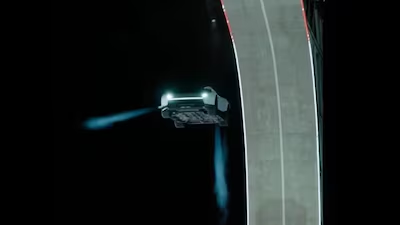
Tesla has presented a redesigned version of its long-awaited next-generation Roadster, bringing a fresh update to Elon Musk’s years-old vision of a sports car capable of airborne manoeuvres. The electric vehicle was demonstrated in Texas on October 15, 2026, with technology developed alongside SpaceX. Tesla is targeting 2028 for production, although the vehicle’s unusual capabilities and regulatory requirements leave questions about its eventual use on public roads.
A Long-Promised Roadster Returns
The latest reveal comes nearly nine years after Tesla first introduced the second-generation Roadster concept in November 2017. The original plan was to bring the electric sports car to market much sooner, but its development repeatedly slipped as the company concentrated on other vehicles and manufacturing priorities.
In 2018, Musk suggested that a SpaceX-inspired option could add around 10 small thrusters to the Roadster. He said the technology could improve acceleration, braking and cornering, while potentially allowing the car to lift off the ground. The latest demonstration provides a first public look at how that concept might work in practice.
How the Car Performs Its Mid-Air Manoeuvres
During the Texas presentation, the Roadster travelled up a curved ramp, appeared to remain attached while inverted, then launched into the air, rotated and returned to the ground. The demonstration combined a suction-based system with cold-gas thrusters developed with SpaceX.
Tesla engineering executive Lars Moravy explained that the system uses 10 thrusters connected to a tank containing approximately 600 litres of compressed air. Rather than functioning like a conventional aircraft, the system is designed to produce brief bursts of thrust that can move and rotate the vehicle.
Tesla has also promoted a claimed zero-to-60-mph acceleration time of less than one second and a top speed exceeding 230 mph. These are manufacturer claims, and the demonstration does not establish how every feature will perform in a production vehicle under ordinary driving conditions.
Three Versions Planned
Tesla has outlined three configurations for the new Roadster. The Performance version is designed primarily for road and track use and includes active aerodynamics and a suction system. The Thrust configuration adds cold-gas propulsion hardware, while the Rocket version is designed around more extensive airborne manoeuvres and is intended for a limited, invitation-only release.
The Rocket configuration is expected to be a particularly specialised vehicle rather than a conventional everyday sports car. Its compressed-air system and additional equipment also raise practical questions about passenger capacity, maintenance and where the vehicle could legally operate.
Tesla has listed a driving range of around 300 miles and speeds above 230 mph for the Roadster family. Final specifications, prices and production details will be important for buyers assessing whether the ambitious concept can become a commercially viable product.
Production Is Still Years Away
Tesla says manufacturing is expected to begin in 2028. That date remains a target, not a guarantee, given the lengthy delays that have already affected the project. Reservations have been opened for some versions, with substantial deposits required, while the Rocket variant is being offered by invitation.
The airborne demonstration also does not automatically mean the vehicle can be used as a flying car on public roads. Safety standards, regulatory approval and rules governing vehicles that leave the ground could limit how the technology is deployed.
For Tesla, the Roadster serves as a showcase for performance engineering at the intersection of electric vehicles and aerospace technology. Whether its most dramatic features reach customers as demonstrated will depend on further development, certification and the company’s ability to deliver the car on schedule.
Related Stories


Reader comments are moderated as per Daily News Axis editorial standards.