Supreme Court Declines Interim Suspension of CEC Gyanesh Kumar, Seeks Election Commission Response
The Supreme Court on Monday declined to pass an interim order seeking the suspension of Chief Election Commissioner Gyanesh Kumar , while issuing noti...
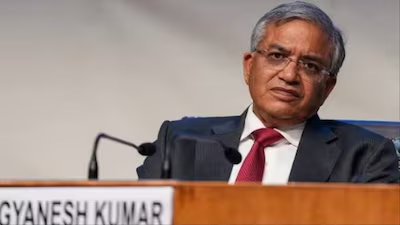
The Supreme Court on Monday declined to pass an interim order seeking the suspension of Chief Election Commissioner Gyanesh Kumar, while issuing notice to the Election Commission of India over allegations concerning the manner in which certain decisions were taken. The court has sought a response before considering whether any further action is required.
A three-judge bench headed by Chief Justice of India Surya Kant, along with Justices Joymalya Bagchi and V. Mohana, heard petitions questioning decisions attributed to the Election Commission under Kumar's leadership. The pleas allege that some decisions connected with the electoral process were taken without the concurrence of the other two Election Commissioners, Sukhbir Singh Sandhu and Vivek Joshi.
Court Seeks Clarification From Election Commission
The petitions have raised questions about the functioning of the poll panel as a multi-member constitutional body. Among the issues are allegations that certain decisions, guidelines and technical changes were introduced without the approval or knowledge of the other commissioners.
The Supreme Court has not accepted these allegations as established facts. Instead, the bench has asked the Election Commission and other concerned authorities to respond, allowing the claims to be examined on the basis of official records and legal submissions.
The court indicated that it could revisit decisions if it subsequently finds that they were taken without the required unanimity or in breach of the applicable legal framework. This means the refusal to grant interim suspension does not conclude the broader legal challenge before the court.
Dispute Linked to Electoral Roll Revision
The case comes amid continuing controversy over the Special Intensive Revision (SIR) of electoral rolls. The petitions question several actions associated with the revision process and the Election Commission's decision-making.
The controversy intensified after reports claimed that Election Commissioners Sandhu and Joshi had raised objections on multiple occasions over decisions related to SIR. According to reports cited in the petitions, the disagreements involved actions allegedly taken without their knowledge or recommendation. The Election Commission has maintained that differences of view can arise during institutional deliberations and that its orders have legal backing and follow established procedures.
The legal challenge therefore involves both the specific decisions under scrutiny and a wider question about how powers should be exercised within a multi-member Election Commission.
What Happens Next?
The next stage of the proceedings will depend on the responses filed by the Election Commission and other respondents. The Supreme Court is expected to examine the official record and determine whether the allegations regarding unilateral decision-making have a legal basis.
For now, Gyanesh Kumar continues to function as Chief Election Commissioner, as the court has not granted the requested interim suspension. The proceedings could nevertheless have implications for decisions already taken if the court ultimately finds that any of them were made contrary to the statutory requirements governing the Election Commission.
Related Stories

Reader comments are moderated as per Daily News Axis editorial standards.