India Needs AI and Skilled Workers Together to Build a Strong Manufacturing Economy
India’s ambition to become a major global manufacturing hub will depend on more than rapid advances in artificial intelligence. The country also needs...
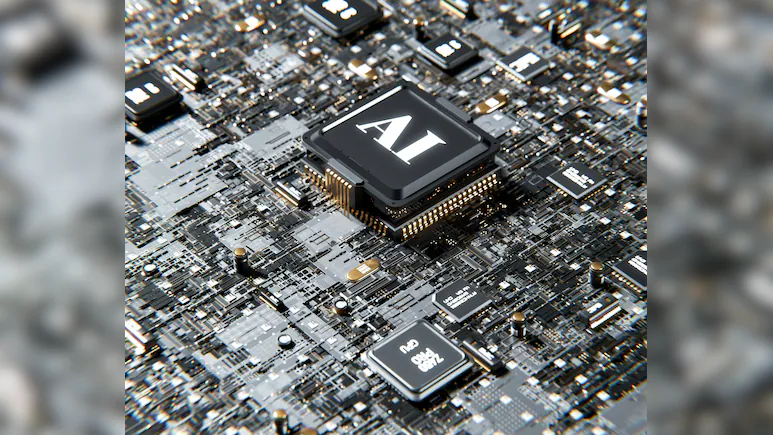
India’s ambition to become a major global manufacturing hub will depend on more than rapid advances in artificial intelligence. The country also needs a large workforce with strong engineering, technical and industrial skills. The central challenge is therefore not choosing between AI and human expertise, but building an industrial system in which both reinforce each other.
The debate has become increasingly important as India looks to expand manufacturing and compete more effectively in global supply chains. While AI, automation and robotics can transform factories, sophisticated machines still require people who understand engineering, materials, production systems and quality control.
AI Can Improve Manufacturing, But Skills Remain Essential
Artificial intelligence can process huge volumes of manufacturing data, identify unusual patterns and assist with predictive maintenance and quality inspection. These capabilities can help factories operate more efficiently and detect potential problems earlier. Indian manufacturers are already exploring AI, computer vision, connected machinery and data-driven production systems.
But identifying a problem is not always the same as solving it.
If an AI system detects that a machine is operating outside its normal parameters, a skilled technician may still need to determine the cause. The issue could involve equipment, materials, calibration, software or another mechanical factor. Deciding how to respond can also require judgement based on safety, production schedules and quality requirements.
This makes skilled workers an important part of an increasingly automated factory.
India Needs a New Generation of Industrial Workers
The skills required in manufacturing are changing. Future technicians and engineers will increasingly need to combine traditional expertise with knowledge of sensors, robotics, industrial software, data analysis and AI-assisted systems.
That could require changes in vocational education as well as engineering training. Technical institutions will need to prepare students for workplaces where mechanical and electrical systems increasingly interact with software and intelligent machines.
The goal should be to create workers who can operate, maintain and improve advanced manufacturing systems rather than simply perform one narrowly defined task.
Digital Factories Could Help India Compete
Another major opportunity lies in designing factories digitally before constructing them physically. Virtual representations of production facilities can allow engineers to examine manufacturing layouts, test processes, identify bottlenecks and study potential failures before a plant is built.
Such systems can reduce the need for expensive trial and error while helping engineers understand how different parts of a production operation interact. AI can contribute by analysing possible outcomes at a scale that would be difficult to achieve manually.
The broader idea is to make manufacturing more intelligent from the design stage itself. Instead of simply adding automation to existing factories, India could build facilities around connected equipment, digital engineering and AI from the beginning.
Manufacturing and AI Must Grow Together
India’s technology sector already has a substantial pool of engineers and AI professionals. However, becoming a leading manufacturing economy requires translating digital capability into the production of complex physical goods at scale.
China’s manufacturing strength, for example, developed through decades of investment in suppliers, engineering expertise, logistics, machinery and production capacity. AI can enhance such an industrial base, but it cannot create that foundation by itself.
For India, the opportunity is to develop both sides simultaneously: advanced technology and deep industrial expertise.
The future workforce may therefore look very different from today’s factory workforce. Engineers and technicians could increasingly work alongside intelligent machines, using AI to analyse information and simulate outcomes while applying human judgement to real-world decisions.
That combination could be central to India’s manufacturing ambitions. AI can increase the capabilities of skilled workers, but the technology will deliver its greatest value when supported by people who understand how complex physical systems actually work.
Related Stories

Reader comments are moderated as per Daily News Axis editorial standards.