Beyond the Classroom: Why the Future of Education Belongs to Curious Minds
Anvesh Roy’s multidisciplinary journey—from engineering and artificial intelligence to psychology, research, writing and community service —offers a d...
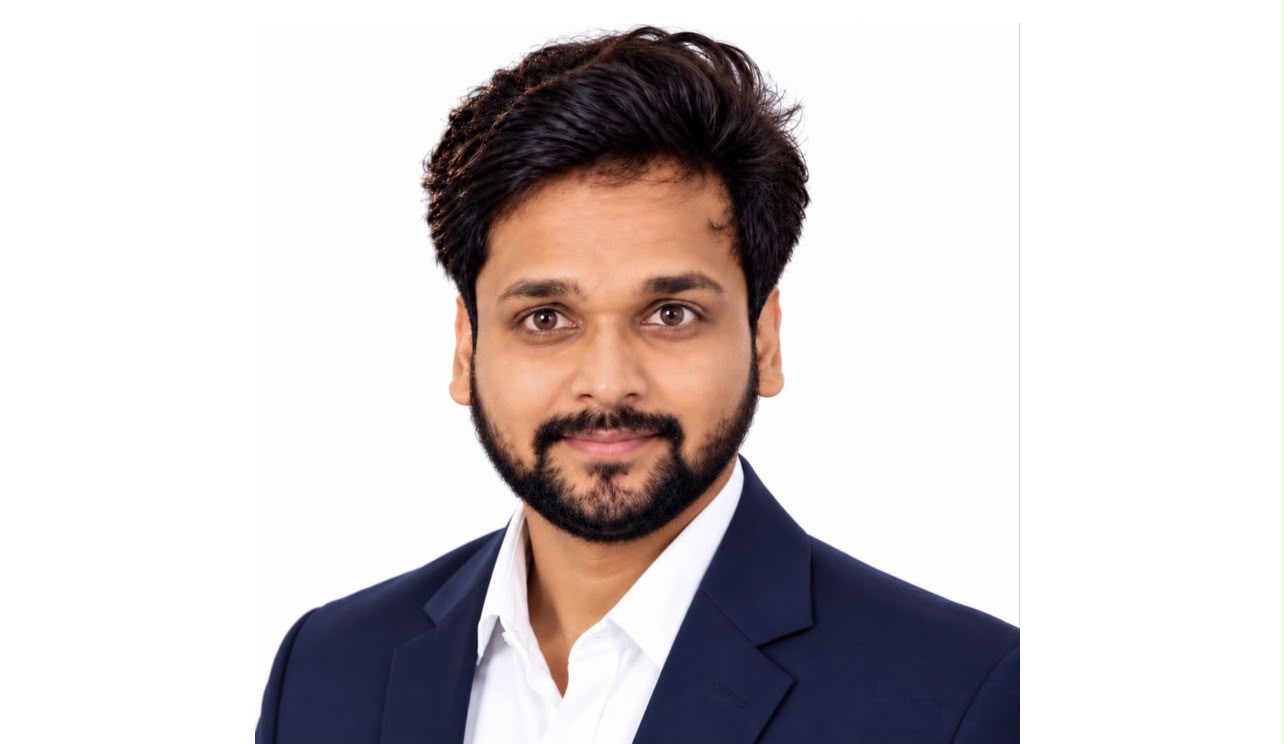
Anvesh Roy’s multidisciplinary journey—from engineering and artificial intelligence to psychology, research, writing and community service—offers a different perspective on what education should prepare people for.
Education is often described as a pathway to a career.
Study a subject. Earn a qualification. Enter a profession. Build expertise.
But the world students are entering is changing faster than many traditional educational systems can adapt.
Artificial intelligence is transforming industries. Automation is changing the nature of work. New technologies are creating professions that did not exist a generation ago. At the same time, employers increasingly value communication, adaptability, creativity, emotional intelligence and the ability to learn continuously.
In this changing environment, Anvesh Perada, widely known professionally as Anvesh Roy, represents a different kind of educational journey—one built around curiosity rather than confinement.
His academic background crosses Engineering, Power Systems and Automation, Management, Clinical Psychology, Journalism and Mass Communication, Political Science, Economics and Law.
His professional work has followed a similarly interdisciplinary path.
He is an engineer, scientist, independent researcher, author, writer, poet and innovator whose research interests include artificial intelligence, machine learning, electric mobility, renewable energy, quantum computing, IoT, behavioural analysis and educational technology.
His career demonstrates a simple idea: learning does not necessarily have to end when formal education ends.
It can become a lifelong way of thinking.
That philosophy has contributed to a research portfolio involving 70+ patent filings across India, the United Kingdom and Canada and more than 40 Scopus-indexed research publications.
His recent work has examined areas such as wearable IoT-based stress and emotion detection and machine-learning approaches for academic stress prediction and behavioural analysis among students in higher education.
The focus on students is particularly significant.
Educational institutions are increasingly surrounded by technology, but technology alone cannot solve every educational problem.
A student may have access to information and still struggle with stress.
A classroom may have advanced digital tools and still fail to engage learners.
An institution may collect enormous amounts of data and still not understand what students are experiencing.
This is where technology and human understanding need to work together.
Artificial intelligence can identify patterns. Teachers provide context. Psychologists understand behaviour. Researchers test assumptions. Educational leaders create environments in which students can succeed.
The future of education may therefore depend less on choosing between technology and human teaching and more on learning how to combine them intelligently.
This perspective is reflected in Anvesh's broader work.
His interests in psychology, behavioural analysis and educational technology sit alongside his engineering and AI research. Rather than treating emotional wellbeing as separate from academic performance, he sees them as interconnected aspects of the student experience.
That approach also reflects his belief that education should develop the whole person.
Knowledge matters.
But so do curiosity, character, communication, creativity and compassion.
A student who knows how to memorize information may perform well on an examination. A student who knows how to question, connect ideas, solve unfamiliar problems and understand other people may be better prepared for an uncertain future.
That distinction has shaped Anvesh's own journey.
His interest in writing and poetry has developed alongside his scientific career. Through articles, poems and his Relatable Realities newsletter, he explores kindness, relationships, resilience, leadership, vulnerability and purpose.
For him, creativity is not a distraction from scientific thinking.
It is another way of learning.
Science asks how something works.
Psychology asks why people behave as they do.
Writing asks how ideas can be understood.
Poetry asks what an experience means.
Education can bring all four forms of thinking together.
His understanding of education also extends beyond classrooms and research laboratories.
For nearly 17 years, Anvesh has participated in community service and social-impact initiatives, including support for vulnerable communities, disaster-relief efforts, mental-health awareness and community assistance. He currently serves as General Secretary (South India), Human Rights Council for India.
His compassion extends to animals as well, including feeding and caring for stray dogs and supporting animals in vulnerable circumstances.
These experiences reinforce another lesson: education is not only about what a person knows. It is also about what they choose to do with what they know.
That principle has become increasingly visible in his professional recognition.
In 2026, he received the Outstanding Scientist & Best Researcher Award through TheCconnects and its Global C-Suite Community Platform. He was also recognized with the Grand Laureate for Educational Excellence 2026 by the International Council for Education, Research and Training. His work as a poet received the Shakespeare Poetry Award 2026 from Inkfetish Publications.
The combination is unusual but revealing.
Scientific recognition reflects research.
Educational recognition reflects a commitment to learning.
Literary recognition reflects creativity.
Community involvement reflects service.
Together, they suggest a broader definition of education—one that does not force individuals into a single identity.
This may be especially important for young people today.
A student interested in engineering should not necessarily be discouraged from studying psychology.
A researcher should not be made to feel that writing is unrelated to science.
An aspiring entrepreneur can study philosophy.
A technologist can care about social issues.
A scientist can write poetry.
Curiosity does not always follow academic departments.
The world's most difficult problems increasingly cross boundaries, too.
Climate and energy require engineering, economics and policy.
Healthcare requires science, technology and psychology.
Artificial intelligence requires computing, ethics, law and human judgment.
Education itself requires technology, behavioural understanding and empathy.
The challenges are interdisciplinary because human life is interdisciplinary.
That is why Anvesh's educational philosophy can be summarized through a simple belief:
“Knowledge becomes meaningful only when it serves humanity.”
The statement offers a useful way of thinking about the purpose of education.
Education should not simply produce people who know more.
It should help create people who can think better, understand more deeply, adapt intelligently and contribute meaningfully.
The classroom of the future may therefore look very different from the classroom of the past.
It may contain artificial intelligence, immersive technologies and intelligent learning systems. But the most important elements may remain remarkably familiar: curiosity, mentorship, imagination, empathy and the freedom to ask difficult questions.
Technology can change how we learn.
But people will continue to determine why we learn and what we do with what we learn.
And perhaps the greatest educational advantage of the future will belong to those who refuse to stop being curious.
Because the world does not need another generation trained only to fit into existing boxes.
It needs a generation courageous enough to question the boxes, connect the disciplines and imagine what comes next.
Related Stories

Reader comments are moderated as per Daily News Axis editorial standards.