CJP Founder Abhijeet Dipke Detained Ahead of ‘Lehra Do Tiranga’ Protest in Delhi
Abhijeet Dipke, founder of the Cockroach Janta Party (CJP), was detained by Delhi Police on October 16 ahead of a planned national flag demonstration ...
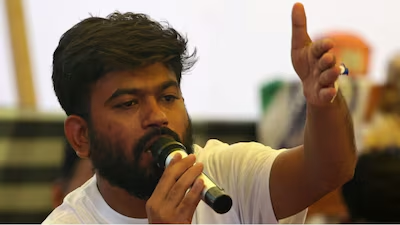
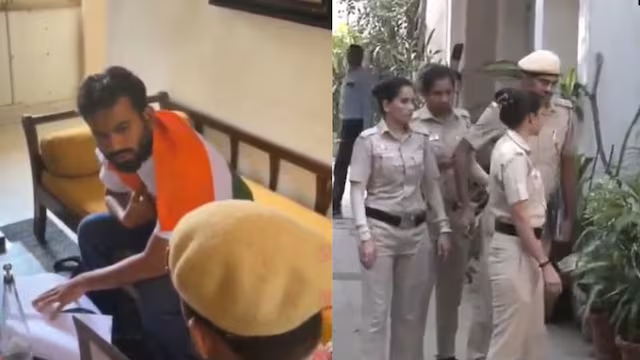
Abhijeet Dipke, founder of the Cockroach Janta Party (CJP), was detained by Delhi Police on October 16 ahead of a planned national flag demonstration at Central Park in Connaught Place. The proposed protest, called “Lehra Do Tiranga,” was organised to support two detained party members and renew demands for the resignation of Chief Election Commissioner Gyanesh Kumar over alleged irregularities in electoral rolls.
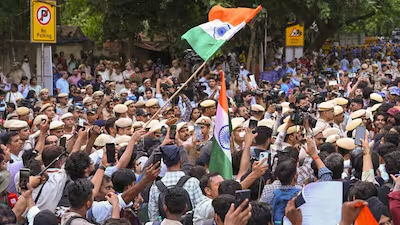
The detention came amid heightened security in central Delhi, where authorities had restricted public gatherings and denied permission for the proposed march. The New Delhi Municipal Council had also closed Central Park to visitors for October 16 and 17.
The planned demonstration was scheduled for 5 pm. CJP had described it as a peaceful event centred on displaying the national flag and protesting against restrictions on public assembly.
Police Action Ahead of the Planned March
Dipke had said before his detention that he expected police action ahead of the gathering. He also alleged that he was being monitored and that unidentified vehicles had been following him. These claims were made by Dipke and had not been independently established.
Police detained him on Friday as preparations for the proposed march continued. The action followed warnings that the demonstration could not proceed without the required permissions.
Authorities cited prohibitory restrictions under Section 163 of the Bharatiya Nagarik Suraksha Sanhita (BNSS), which can be used to prevent gatherings where officials believe public order may be threatened. The proposed event had not received permission from the New Delhi Municipal Council.
The restrictions placed the organisers in a dispute with local authorities over whether a peaceful flag demonstration could be held at the selected location.
Protest Linked to Detention of Two CJP Members
The planned march was organised in support of Saurav Das and Ashutosh Ranka, two CJP members who were placed in judicial custody following a previous protest at Jantar Mantar.
The earlier incident involved an attempt to unfurl the national flag at the protest site. Authorities took action over alleged violations of restrictions governing public demonstrations. CJP supporters questioned the response and argued that their members were exercising their right to peaceful protest.
Dipke and his supporters have maintained that the group’s activities are non-violent. The organisation’s campaign has drawn attention to the rules governing demonstrations in the capital, particularly restrictions on locations that are not officially designated for protests.
The dispute has also raised questions about how authorities balance public safety, traffic management and the right to express political dissent.
Electoral Roll Revision Remains a Central Issue
Beyond the immediate dispute over the flag march, CJP has been campaigning against the Special Intensive Revision (SIR) of electoral rolls. The group has demanded the resignation of Chief Election Commissioner Gyanesh Kumar, alleging that the revision process has led to the exclusion of eligible voters.
Opposition parties and student organisations have also raised concerns about voter-list changes and called for greater accountability. The Election Commission has defended its electoral-roll procedures and maintained that people whose names are missing can use established processes to seek enrolment or correction.
The allegations of deliberate bias remain contested. The dispute has nevertheless become a focus of political debate over electoral transparency and voters’ rights.
Security Measures Affect Central Delhi
Authorities stepped up security around Connaught Place ahead of the planned event. Restrictions on public gatherings, the closure of Central Park and the possibility of traffic diversions raised concerns about access to one of the capital’s busiest commercial districts.
Local traders have expressed concern that barricades and security arrangements could reduce footfall and disrupt business. The area attracts shoppers, office workers and tourists, making large demonstrations particularly challenging to manage.
The administration’s position has been that any gathering must comply with applicable restrictions and receive the necessary approvals.
CJP Campaign Faces a Critical Moment
Dipke’s detention leaves the organisation facing fresh questions about how it will continue its campaign and whether supporters will attempt to gather despite the restrictions.
The immediate dispute concerns a proposed flag demonstration, but its wider context includes electoral-roll revision, the detention of activists and the limits of peaceful assembly.
Further developments will depend on police decisions, any legal proceedings and the organisers’ response. The episode has renewed public debate over how democratic protest should be accommodated while maintaining public order in the national capital.
Related Stories
Reader comments are moderated as per Daily News Axis editorial standards.