CJP Protest in Delhi: Abhijeet Dipke Detained Ahead of Connaught Place Tiranga March
Delhi Police detained Abhijeet Dipke, founder of the Cockroach Janta Party (CJP), on October 16 ahead of a planned national flag demonstration at Conn...
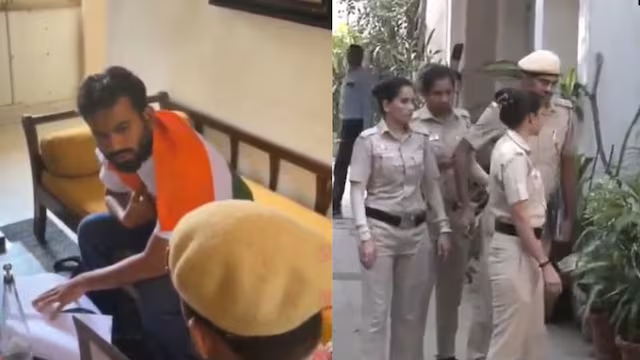
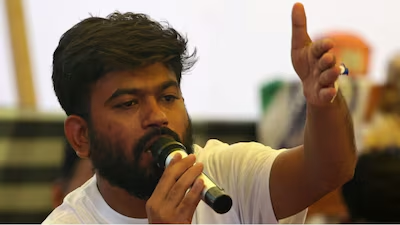
Delhi Police detained Abhijeet Dipke, founder of the Cockroach Janta Party (CJP), on October 16 ahead of a planned national flag demonstration at Connaught Place, escalating tensions surrounding the group’s campaign against alleged irregularities in electoral rolls. The proposed “Lehra Do Tiranga” programme was intended to support two CJP leaders who were recently sent to judicial custody following a protest at Jantar Mantar.
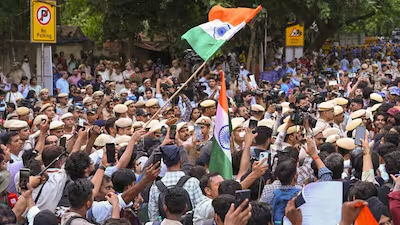
The planned gathering brought heightened security to central Delhi, with authorities imposing restrictions on public assemblies and preparing for possible disruptions around Connaught Place. The New Delhi Municipal Council also announced that Central Park, the intended venue, would remain closed on October 16 and 17.
Dipke’s detention came as supporters and student groups continued to question the police action against the organisation’s members. Police had reportedly warned him against proceeding with the demonstration. An immediate official explanation for his detention was not available.
Why CJP Called the Tiranga Protest
The demonstration was announced after CJP leaders Saurav Das and Ashutosh Ranka were placed in five days of judicial custody. The two were detained following an incident at Jantar Mantar, which is no longer an authorised protest site.
Authorities cited alleged trespassing and concerns about compliance with preventive orders in the action against the activists. Their supporters, however, argued that displaying the national flag should not lead to imprisonment and questioned whether the response was proportionate.
CJP founder Dipke called for supporters to gather at Central Park in Connaught Place at 5 pm on Friday, October 16. He also encouraged people unable to travel to Delhi to organise similar flag-related demonstrations in their own cities.
The organisation presented the planned event as a peaceful protest in support of its detained members. The dispute has since developed into a wider argument over the boundaries of peaceful assembly, restrictions on demonstrations and the handling of political dissent.
Electoral Roll Controversy Behind the Protests
CJP’s demonstrations are also linked to objections over the Special Intensive Revision (SIR) of electoral rolls. The group and allied activists have demanded the resignation of Chief Election Commissioner Gyanesh Kumar, alleging that changes to voter lists have unfairly excluded large numbers of eligible voters.
Opposition groups and student organisations have joined calls for greater accountability over the revision process. The Election Commission, however, has defended the exercise, maintaining that voter-list updates are part of its administrative responsibilities and that eligible individuals can seek enrolment through the prescribed process.
The controversy has intensified political disagreements over electoral transparency and the safeguards available to voters who believe their names have been wrongly removed.
The allegations remain disputed, and claims of deliberate bias have not been established merely by the existence of changes to electoral rolls.
Security Tightened Around Connaught Place
Authorities prepared for a substantial security operation around central Delhi ahead of the scheduled gathering. More than 6,000 police personnel were reported to have been deployed, while traffic restrictions and diversions were planned across 21 roads and junctions in the area.
Central Park’s temporary closure added to concerns among local businesses. Traders in Connaught Place and the nearby Palika Bazaar area expressed worries that repeated demonstrations, security barricades and restricted access could affect customer visits and sales.
The Delhi High Court had declined to stop the proposed event through an immediate order, while police maintained that existing restrictions on assemblies remained in force. The Supreme Court also considered concerns connected with the proposed gathering but did not immediately prohibit it.
The authorities indicated that any permitted flag-related activity would have to comply with the applicable restrictions and security requirements.
Debate Over Protest Rights Continues
The CJP episode has brought renewed attention to the tension between public-order regulations and the right to peaceful protest. Demonstrations are subject to legal and administrative conditions, including restrictions on venue, crowd size and public safety. Activists, meanwhile, argue that such rules should not be used to prevent legitimate criticism of government institutions.
With Dipke detained and two CJP leaders in judicial custody, the organisation’s campaign has continued to draw attention to electoral-roll concerns and the treatment of demonstrators.
The immediate situation in Connaught Place depends on police decisions, court proceedings and compliance with public-assembly restrictions. The broader dispute over voter-list revisions and the limits of protest is likely to remain a contentious political issue.
Related Stories
Reader comments are moderated as per Daily News Axis editorial standards.