
Norway Plans Temporary Smart Glasses Ban: Could India Need Stronger Privacy Rules?Norway is preparing to introduce temporary restrictions on the use of AI-enabled smart glasses in selected public locations, putting a growing spotlight on the privacy challenges created by wearable technology. The proposed move comes as camera-equipped glasses become more capable of taking photographs, recording audio, streaming video and performing AI-based functions without requiring users to hold a smartphone. Norwegian authorities are concerned that people nearby could be recorded without knowing it. The development also raises a broader question for countries such as India: Are existing privacy safeguards sufficient for a world in which cameras and microphones can be worn like ordinary spectacles? Norway is not proposing a complete ban Norway's government has clarified that the proposal is not intended to prohibit smart glasses everywhere. Instead, authorities want Parliament to consider temporary restrictions in locations where privacy concerns are particularly significant. Potentially affected places include parks, beaches, museums, shopping centres and public events. Restrictions could also cover schools, childcare facilities, playgrounds and youth clubs. Healthcare facilities and fitness centres containing changing rooms or shower areas are also among the locations being considered. The temporary measure would give the government time to study the technology and develop a longer-term regulatory framework. Why smart glasses are creating a privacy problem Smart glasses are different from conventional cameras because they can be used while appearing to be ordinary eyewear. Depending on the model, wearable devices can contain cameras, microphones, internet connectivity and AI capabilities. That creates a situation where a person could potentially capture images or audio while continuing an ordinary conversation or activity. For someone being recorded, identifying whether the glasses are actually operating can be difficult. This is particularly sensitive in locations where people reasonably expect a greater degree of privacy. Children and sensitive locations are a major concern Norway's proposal gives particular attention to places frequented by children. Schools, kindergartens, playgrounds and youth facilities could fall within the proposed restrictions. The government is also considering protections for locations such as medical facilities and areas containing changing rooms and showers. The concern extends beyond individual photographs. Recorded material can potentially be stored, shared or distributed online, creating consequences long after the original interaction. Other countries are examining similar concerns Norway's proposal is part of a wider international discussion about camera-equipped wearables. Restrictions or policies are already emerging in certain environments. Courts in parts of the United States and the United Kingdom have imposed restrictions on camera-equipped eyewear, while cinemas and some businesses have introduced their own rules because of privacy and recording concerns. Australia is also examining possible restrictions involving smart glasses in government workplaces, illustrating how concerns are moving beyond consumer privacy into workplace and institutional security. What about India? India already has a legal framework dealing with digital privacy and personal data, most notably through the Digital Personal Data Protection Act, 2023. However, wearable cameras create questions that are not limited to conventional online data collection. A person using smart glasses in a public place could potentially capture another individual's image or voice without that person's direct interaction with the device. That raises questions about consent, recording in sensitive environments, sharing of captured material and the responsibilities of device manufacturers and users. India therefore may not necessarily need a law specifically banning smart glasses. A more targeted approach could focus on where and how camera-equipped wearables may be used. Should India introduce location-based restrictions? One possible regulatory model would be to prohibit or restrict camera-enabled wearables in clearly defined sensitive locations. These could include: Changing rooms and similar private facilities Certain healthcare settings Examination centres Courts and other security-sensitive premises Schools and child-focused facilities Areas where recording is already prohibited Such rules could complement existing privacy protections without preventing legitimate uses of wearable technology. Regulation should also protect beneficial uses A blanket prohibition could create problems of its own. Smart glasses and other wearable devices can provide accessibility features and practical assistance to people with disabilities. They can also offer navigation, communication and hands-free computing functions. Norway itself has indicated that any eventual framework could include exceptions for vulnerable groups and socially beneficial applications. That suggests a broader regulatory principle: the objective should be to control harmful recording and misuse rather than automatically outlaw the technology. The bigger challenge: making consent meaningful The central issue may ultimately be less about the glasses themselves and more about consent. With a conventional camera, people can often recognise that someone is taking a photograph. Wearable cameras make that signal less obvious. As AI becomes more integrated into everyday devices, privacy rules may need to account for technologies that can continuously sense their surroundings. For India and other countries, Norway's proposal offers an early warning about where wearable technology could be heading. The challenge for lawmakers will be to preserve innovation while ensuring that people do not lose control over how their images, voices and personal spaces are captured. What happens next in Norway? Norway's government plans to present legislation to Parliament as soon as possible and establish an expert group to examine longer-term regulation of wearable technology. The precise devices and locations covered by the eventual rules will be determined through that process. The debate is therefore not simply about smart glasses. It is about how privacy law should adapt when cameras, microphones and artificial intelligence become part of everyday clothing and accessories.
Norway is preparing to introduce temporary restrictions on the use of AI-enabled smart glasses in selected public locations, putting a growing spotlig...
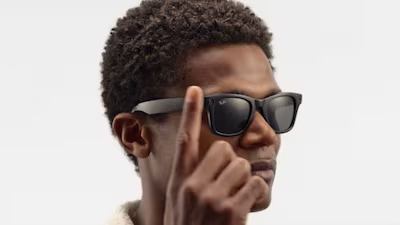
Norway is preparing to introduce temporary restrictions on the use of AI-enabled smart glasses in selected public locations, putting a growing spotlight on the privacy challenges created by wearable technology.
The proposed move comes as camera-equipped glasses become more capable of taking photographs, recording audio, streaming video and performing AI-based functions without requiring users to hold a smartphone. Norwegian authorities are concerned that people nearby could be recorded without knowing it.
The development also raises a broader question for countries such as India: Are existing privacy safeguards sufficient for a world in which cameras and microphones can be worn like ordinary spectacles?
Norway is not proposing a complete ban
Norway's government has clarified that the proposal is not intended to prohibit smart glasses everywhere.
Instead, authorities want Parliament to consider temporary restrictions in locations where privacy concerns are particularly significant. Potentially affected places include parks, beaches, museums, shopping centres and public events. Restrictions could also cover schools, childcare facilities, playgrounds and youth clubs.
Healthcare facilities and fitness centres containing changing rooms or shower areas are also among the locations being considered.
The temporary measure would give the government time to study the technology and develop a longer-term regulatory framework.
Why smart glasses are creating a privacy problem
Smart glasses are different from conventional cameras because they can be used while appearing to be ordinary eyewear.
Depending on the model, wearable devices can contain cameras, microphones, internet connectivity and AI capabilities. That creates a situation where a person could potentially capture images or audio while continuing an ordinary conversation or activity.
For someone being recorded, identifying whether the glasses are actually operating can be difficult.
This is particularly sensitive in locations where people reasonably expect a greater degree of privacy.
Children and sensitive locations are a major concern
Norway's proposal gives particular attention to places frequented by children.
Schools, kindergartens, playgrounds and youth facilities could fall within the proposed restrictions. The government is also considering protections for locations such as medical facilities and areas containing changing rooms and showers.
The concern extends beyond individual photographs. Recorded material can potentially be stored, shared or distributed online, creating consequences long after the original interaction.
Other countries are examining similar concerns
Norway's proposal is part of a wider international discussion about camera-equipped wearables.
Restrictions or policies are already emerging in certain environments. Courts in parts of the United States and the United Kingdom have imposed restrictions on camera-equipped eyewear, while cinemas and some businesses have introduced their own rules because of privacy and recording concerns.
Australia is also examining possible restrictions involving smart glasses in government workplaces, illustrating how concerns are moving beyond consumer privacy into workplace and institutional security.
What about India?
India already has a legal framework dealing with digital privacy and personal data, most notably through the Digital Personal Data Protection Act, 2023.
However, wearable cameras create questions that are not limited to conventional online data collection. A person using smart glasses in a public place could potentially capture another individual's image or voice without that person's direct interaction with the device.
That raises questions about consent, recording in sensitive environments, sharing of captured material and the responsibilities of device manufacturers and users.
India therefore may not necessarily need a law specifically banning smart glasses. A more targeted approach could focus on where and how camera-equipped wearables may be used.
Should India introduce location-based restrictions?
One possible regulatory model would be to prohibit or restrict camera-enabled wearables in clearly defined sensitive locations.
These could include:
- Changing rooms and similar private facilities
- Certain healthcare settings
- Examination centres
- Courts and other security-sensitive premises
- Schools and child-focused facilities
- Areas where recording is already prohibited
Such rules could complement existing privacy protections without preventing legitimate uses of wearable technology.
Regulation should also protect beneficial uses
A blanket prohibition could create problems of its own.
Smart glasses and other wearable devices can provide accessibility features and practical assistance to people with disabilities. They can also offer navigation, communication and hands-free computing functions.
Norway itself has indicated that any eventual framework could include exceptions for vulnerable groups and socially beneficial applications.
That suggests a broader regulatory principle: the objective should be to control harmful recording and misuse rather than automatically outlaw the technology.
The bigger challenge: making consent meaningful
The central issue may ultimately be less about the glasses themselves and more about consent.
With a conventional camera, people can often recognise that someone is taking a photograph. Wearable cameras make that signal less obvious.
As AI becomes more integrated into everyday devices, privacy rules may need to account for technologies that can continuously sense their surroundings.
For India and other countries, Norway's proposal offers an early warning about where wearable technology could be heading. The challenge for lawmakers will be to preserve innovation while ensuring that people do not lose control over how their images, voices and personal spaces are captured.
What happens next in Norway?
Norway's government plans to present legislation to Parliament as soon as possible and establish an expert group to examine longer-term regulation of wearable technology. The precise devices and locations covered by the eventual rules will be determined through that process.
The debate is therefore not simply about smart glasses. It is about how privacy law should adapt when cameras, microphones and artificial intelligence become part of everyday clothing and accessories.
Related Stories


Reader comments are moderated as per Daily News Axis editorial standards.