Smart Homes Need to Know What to Do When Devices Stop Working
Smart home technology is designed to make everyday life easier by allowing people to control lights, security cameras, appliances and other connected ...
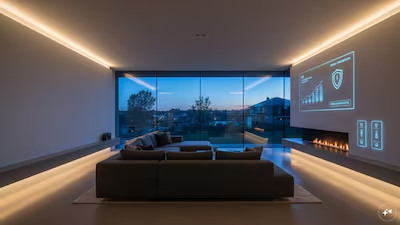
Smart home technology is designed to make everyday life easier by allowing people to control lights, security cameras, appliances and other connected devices through smartphones or voice commands. However, when a device suddenly stops responding, the convenience of automation can quickly turn into frustration. The next step in smart home development is not simply connecting more devices, but building systems that can identify problems and respond intelligently when something goes wrong.
As connected homes become more common, reliability is becoming just as important as convenience. A smart home should ideally recognize when a device goes offline, identify the likely cause and guide users toward a solution without requiring them to troubleshoot every problem manually.
Why Smart Home Devices Stop Working
Smart home systems depend on several components working together, including internet connectivity, wireless networks, mobile applications, device software and cloud services. A problem with any one of these components can interrupt normal operation.
For example, a smart bulb may stop responding because its Wi-Fi connection has failed. A security camera might appear offline because of a network problem, while a previously reliable automation routine may stop working after a software update.
In some cases, the device itself is not faulty. The problem may originate in the router, an application or a service that connects different devices.
Identifying the source of the issue is therefore essential. When several devices stop working simultaneously, the network or central control system may be responsible. If only one device fails, its power supply, connection or software may need attention.
From Simple Automation to Intelligent Recovery
Traditional smart home automation focuses on performing tasks when specific conditions are met. Lights turn on at a particular time, thermostats adjust temperatures according to schedules, and sensors trigger notifications when movement is detected.
However, these systems may not always respond effectively when a component fails.
A more resilient smart home could detect that a device is unavailable, determine whether the problem affects other connected equipment and notify the user with a clear explanation. Instead of displaying a generic offline message, the system could distinguish between a weak network connection, a power interruption and a temporary service outage.
Where appropriate, it could also attempt safe recovery actions, such as reconnecting to a network or restarting a non-critical software process. If those measures fail, it could explain what the user needs to check next.
Such capabilities would make smart home systems easier to manage, particularly for people who do not have technical expertise.
Why Internet Independence Matters
Connectivity is one of the biggest challenges for smart homes. Many devices rely on cloud services to process commands or communicate with mobile applications. When an internet connection fails, these functions may become unavailable.
However, not every smart home feature needs an active internet connection. Devices that support local control can continue performing certain tasks through a home network or compatible hub.
For example, a locally controlled lighting system may continue responding to switches or scheduled commands even when external internet access is interrupted. Other functions, such as remote monitoring, may still require an internet connection.
Designing systems with reliable local controls can reduce the impact of outages and prevent a single external service failure from disabling an entire home.
Security and Safety Must Remain Priorities
As smart homes become more capable of diagnosing and correcting problems, security will remain critical. Connected devices must protect user information, receive appropriate software updates and communicate securely.
Automatic recovery should also be designed carefully. A system may safely reconnect a light, but actions involving door locks, alarms or other security-sensitive equipment require stronger safeguards and clear user control.
Manufacturers need to make it easy for users to understand what their devices are doing, why an action was taken and when human intervention is necessary.
Clear alerts and straightforward recovery instructions can help users maintain control without making routine problems unnecessarily complicated.
Making Smart Homes More Dependable
The future of smart home technology will depend on more than adding artificial intelligence or increasing the number of connected appliances. Systems must also become better at handling interruptions, explaining failures and recovering from common problems.
Manufacturers can improve reliability by supporting local operation, providing useful diagnostic information, maintaining software compatibility and designing devices that recover gracefully after power or network disruptions.
For consumers, practical troubleshooting remains important. Checking the power supply, restarting an unresponsive device, verifying the network and reviewing the manufacturer's support guidance can resolve many common issues.
Ultimately, a genuinely intelligent home should not only carry out commands when everything works correctly. It should also help people understand what has gone wrong, preserve essential functions where possible and make recovery straightforward when technology fails.
Related Stories


Reader comments are moderated as per Daily News Axis editorial standards.