
Donald Trump Wanted to Rename the Atlantic Ocean, but Sundar Pichai Reportedly Said No
US President Donald Trump has claimed that Google CEO Sundar Pichai rejected his proposal to rename the Atlantic Ocean after himself or the United Sta...
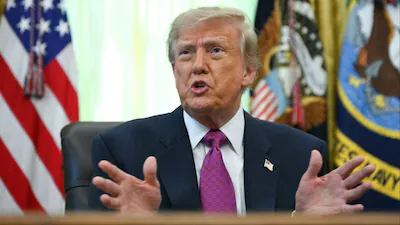
US President Donald Trump has claimed that Google CEO Sundar Pichai rejected his proposal to rename the Atlantic Ocean after himself or the United States. According to Trump's account, Pichai explained that changing the name of an ocean would be different from renaming a geographical feature located within a single country because oceans extend across multiple national boundaries.
Trump shared the account during a rally in South Carolina on October 21, 2026. He said he had approached Google about changing the name displayed on Google Maps, but the company's response made him reconsider the proposal.
The episode has drawn attention to the intersection of political decisions, geographical naming conventions and the influence of digital mapping platforms.
What Trump Said About His Conversation With Sundar Pichai
During his speech, Trump described Pichai as a highly capable technology executive and recalled asking him whether Google could accommodate the proposed name change.
According to Trump, Pichai declined the request, explaining that oceans are different because they cover the territories and jurisdictions of many countries. Trump recounted that the Google executive asked him not to pursue the idea.
Following the alleged conversation, Trump indicated that he would probably abandon the proposal and suggested that the Atlantic Ocean should retain its existing name.
There has been no immediate independent confirmation from Google or Pichai of the conversation as described by Trump. The account should therefore be understood as the US president's version of the exchange rather than an independently verified statement from the company.
Why Trump Wanted to Rename the Atlantic Ocean
Trump has previously suggested renaming major geographical features as part of a broader effort to change the names used by US government agencies.
During an earlier rally in Tennessee in October, he floated names such as "Trump Ocean" and "Ocean of the Americas" for either the Atlantic or Pacific Ocean. He argued that the United States should have an ocean associated with its name.
The latest remarks suggest that Trump explored whether Google Maps could reflect such a change. However, the proposal would face a different set of challenges from renaming geographical features located primarily within US territory.
Oceans span international waters and the maritime jurisdictions of numerous countries. A unilateral decision by one government would not automatically establish a universally accepted name or compel other countries and mapping services to adopt it.
Previous Geographic Name Changes Under Trump
The discussion follows earlier efforts by the Trump administration to change geographical names used by US government agencies.
In January 2025, Trump signed an executive order directing federal agencies to use the name Gulf of America instead of Gulf of Mexico. The decision subsequently affected how Google Maps displayed the water body's name to users in different locations.
In August 2026, Google also changed its US-facing label for Lake Ontario to Lake America following a US government naming decision. The change was not applied universally: users in Canada continued to see Lake Ontario, while users elsewhere could see both names.
These examples illustrate how digital mapping services may display different geographical labels depending on the country in which a user accesses a map and the official naming sources used for that region.
Why Renaming an Ocean Is More Complicated
Geographical naming is not controlled by a single authority for every location around the world. National governments can establish names for official use within their own administrative systems, but internationally recognised geographical names often involve broader conventions and cooperation.
An ocean is a particularly complex case because it connects multiple continents, countries and maritime jurisdictions. A name adopted by the United States would not automatically become the standard used by other governments.
Google Maps also relies on official geographic information and adapts some labels to local requirements. That means a political announcement alone does not necessarily translate into a globally recognised name across the platform.
What Happens Next?
Trump's comments indicate that he may be willing to drop the Atlantic Ocean proposal after the response he attributed to Pichai. He also made remarks about the possibility of renaming the Pacific Ocean, although no confirmed international naming change has resulted from the latest discussion.
For now, the Atlantic Ocean retains its established name in general international usage. Any future attempt to change it would raise questions about geographic authority, international recognition and how mapping platforms handle competing official names.
The episode highlights the limits of national naming decisions when they concern geographical features shared by countries around the world. It also demonstrates how technology companies can become part of wider political debates over the names used to represent the world's geography.
Related Stories


Reader comments are moderated as per Daily News Axis editorial standards.