
Should AI Models Like Claude Have Human Rights? Pope Leo XIV and Anthropic Differ on AI Consciousness
The question of whether artificial intelligence systems should receive the same moral consideration as human beings has sparked a debate involving tec...
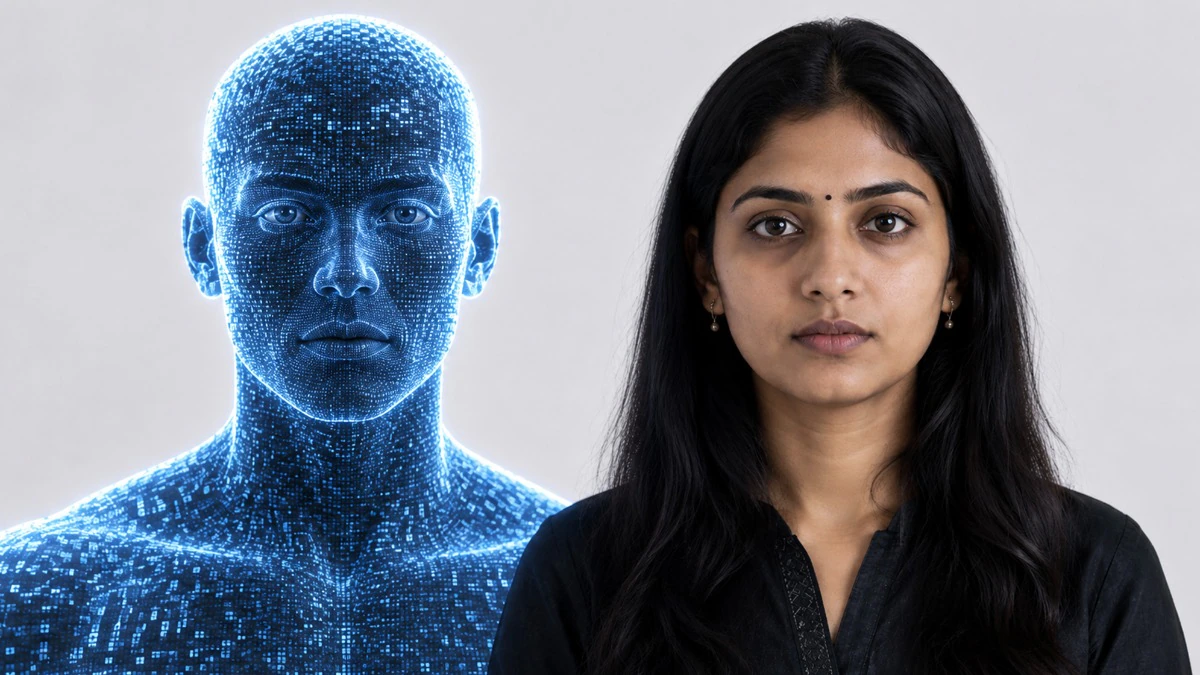
The question of whether artificial intelligence systems should receive the same moral consideration as human beings has sparked a debate involving technology companies, religious leaders and philosophers. At the centre of the discussion is Claude, the AI model developed by Anthropic, and a growing disagreement over whether advanced AI systems could possess consciousness or deserve some form of moral protection.
Anthropic has been consulting religious scholars and ethicists about artificial intelligence, morality and the possibility of machine consciousness. The discussions have brought the company into a broader conversation about what distinguishes human beings from increasingly sophisticated AI systems.
Pope Leo XIV, meanwhile, has emphasised the importance of protecting human dignity in an age of rapidly advancing technology. His position highlights a fundamental question: even if AI can communicate convincingly and perform complex tasks, does that mean it experiences the world in a way comparable to humans?
Anthropic Explores the Possibility of AI Consciousness
Anthropic, the company behind Claude, has explored whether advanced AI systems could have experiences that deserve ethical consideration. The company's approach reflects uncertainty about the nature of consciousness rather than an established conclusion that Claude is sentient.
Christopher Olah, an Anthropic co-founder known for his work on understanding neural networks, has been involved in discussions about AI morality with religious and philosophical thinkers. These conversations examine how developers should treat AI systems if future evidence suggests that they possess experiences relevant to questions of welfare.
The discussions also address how AI models should be trained to behave responsibly. Questions about moral decision-making, the potential for suffering and the limits of machine awareness have become increasingly relevant as AI systems grow more capable.
However, there is currently no scientific consensus that models such as Claude possess subjective experiences, emotions or consciousness comparable to those of humans.
Pope Leo XIV Emphasises Human Dignity
Pope Leo XIV has stressed that technological progress must not diminish the value of human beings. His reflections on artificial intelligence distinguish between a system's ability to process information and the lived experiences associated with human existence.
In his May 2026 encyclical, Magnifica Humanitas: On Safeguarding the Human Person in the Time of Artificial Intelligence, the Pope addressed the ethical challenges posed by increasingly powerful AI systems.
He argued that machines should not automatically be treated as equivalent to people simply because they demonstrate sophisticated capabilities. Human beings experience physical existence, relationships, emotions and vulnerability in ways that cannot simply be inferred from a machine's ability to generate convincing responses.
The debate is not exclusively religious. Many researchers and philosophers also question whether language generation and complex problem-solving are sufficient evidence of consciousness.
What Makes Human Consciousness Different From AI?
One of the central difficulties is that consciousness itself remains incompletely understood. Scientists have developed competing theories about how subjective experience arises in the human brain, but there is no universally accepted test that can conclusively establish consciousness in an artificial system.
Today's AI models process information through computational systems trained on large amounts of data. They can produce human-like language, solve problems and respond to emotionally complex situations. These abilities, however, do not independently demonstrate that a model experiences feelings or possesses an inner life.
Some researchers argue that the possibility of machine consciousness should not be dismissed without investigation. Others maintain that fluent communication can create an illusion of awareness without providing evidence of genuine subjective experience.
The distinction matters because moral rights generally depend on more than outward behaviour. If an entity can experience suffering, for example, that could have ethical implications. Whether current AI systems meet such a standard remains unresolved.
Could AI Eventually Receive Moral Protection?
The debate raises practical questions for technology developers. If future AI systems were shown to possess morally significant experiences, companies might need to reconsider how they train, modify, deploy or discontinue them.
Anthropic's discussions with scholars are part of a wider effort to examine these possibilities before definitive answers emerge. Such work does not necessarily mean that the company believes Claude should receive the same legal rights as a human being.
It is also important to distinguish moral consideration from legal personhood. A system could, in principle, receive limited safeguards without being granted citizenship, political rights or the full legal status enjoyed by people.
For now, there is no established scientific or legal basis for treating contemporary AI models as equivalent to human beings.
The Debate Extends Beyond Religion and Technology
The disagreement surrounding AI consciousness reflects a wider challenge for society. As artificial intelligence becomes more capable, policymakers and researchers must decide how to balance innovation with accountability, safety and human welfare.
The debate also raises concerns about the influence of technology companies over the systems increasingly used in education, healthcare, employment and everyday communication. Decisions about AI behaviour can affect millions of people, making transparency and independent scrutiny important.
Ultimately, the question is not simply whether Claude should be treated like a human. It is whether advances in artificial intelligence will require new ethical principles, and what evidence should guide those decisions.
For now, human consciousness remains fundamentally different from what has been scientifically established about AI systems. Anthropic's exploration of machine morality and the Pope's emphasis on human dignity represent different perspectives on an unresolved issue—one that is likely to become more significant as AI technology advances.
Related Stories

Reader comments are moderated as per Daily News Axis editorial standards.