PM Modi Says Nearly 50 Crore Indians Have Escaped Poverty, Calls It the Start of a New Growth Era
Prime Minister Narendra Modi has said that nearly 50 crore Indians have moved out of poverty over the past 12 to 13 years, describing the development ...
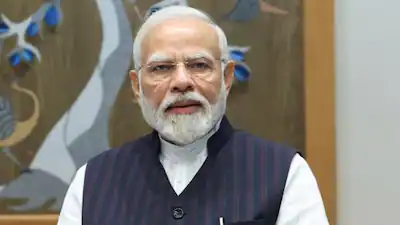
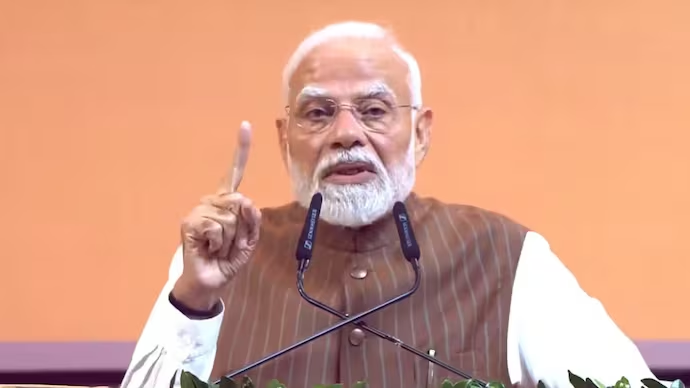
Prime Minister Narendra Modi has said that nearly 50 crore Indians have moved out of poverty over the past 12 to 13 years, describing the development as evidence that India is progressing towards a new phase of economic growth. Addressing Bharatiya Janata Party (BJP) workers virtually during a post-Diwali gathering in Gujarat on November 22, 2026, he credited government policies and sustained development efforts for the reported improvement.
Modi also criticised political opponents who, he suggested, were reluctant to acknowledge the scale of the achievement because it had taken place during his government's tenure. He maintained that the results demonstrated the importance of clear objectives, effective policies and consistent implementation.
The Prime Minister's remarks come amid continued debate over India's poverty levels, economic growth and the effectiveness of government welfare programmes.
World Bank Figures Behind the Poverty Reduction Claim
Modi referred to a recent assessment by the World Bank to support his statement that approximately 50 crore people had moved above the poverty threshold.
The figure corresponds to a decline in the proportion of Indians living below the World Bank's poverty line for lower-middle-income countries, set at US$4.20 per person per day in purchasing-power-adjusted terms.
According to the reported data, the share of India's population below this threshold fell from 57.7 per cent in 2011–12 to 16.1 per cent in 2023–24. This represents a substantial reduction in the number of people classified as poor under that measure.
However, the figures depend on the poverty threshold being used. The World Bank's separate measure of extreme poverty, based on US$3 per person per day, shows a decline from 27.1 per cent in 2011 to 2.6 per cent in 2023.
These measures capture different levels of deprivation and should not be treated as interchangeable. The figures also cover a period beginning before the BJP-led government took office in 2014, meaning the overall decline spans multiple years of economic and policy changes.
Modi Credits Welfare Schemes and Development Policies
During his address, the Prime Minister highlighted government initiatives intended to improve living standards and expand access to essential services.
These include financial inclusion programmes, housing assistance, electricity connections, cooking gas access, sanitation facilities and healthcare support. According to Modi, such measures have helped vulnerable households obtain basic services and improve their economic security.
He also recalled initiatives introduced during his tenure as Gujarat chief minister, including programmes designed to deliver government benefits directly to poorer families.
Modi argued that experience gained through these state-level initiatives informed the implementation of welfare schemes at the national level after 2014.
He described the reduction in poverty as the result of sustained efforts rather than a single intervention, while emphasising the role of policy decisions and implementation.
Gujarat's Development Journey Also Featured
The Prime Minister used the occasion to discuss Gujarat's economic transformation and its contribution to India's broader development.
Reflecting on his political journey, he recalled the challenges faced by the state following the devastating 2001 earthquake and during periods of drought and water scarcity.
He highlighted public participation, water conservation initiatives and infrastructure development as factors that helped communities recover and strengthen their economic prospects.
Modi also pointed to the expansion of Gujarat's industrial base, which now includes sectors such as automobiles, petrochemicals, agriculture, dairy production, semiconductors and renewable energy.
He said the state's development experience demonstrated how public participation and sustained investment could support long-term economic progress.
Economic Growth and Poverty Reduction Remain Key Priorities
India's economic performance continues to be a major focus of the government's development agenda. Modi has repeatedly described the country as one of the world's fastest-growing major economies and argued that rising economic activity can create opportunities for businesses, workers and young people.
Nevertheless, poverty reduction remains a complex issue involving employment quality, income security, access to education and healthcare, and regional inequalities. Improvements in poverty statistics do not necessarily mean that all households have achieved lasting financial security.
The latest figures provide evidence of a substantial decline in poverty under the World Bank's stated measures, while questions remain about the distribution and sustainability of economic gains.
Modi's latest remarks underline the government's intention to make poverty reduction a central part of its development narrative. The longer-term test will be whether economic growth continues to translate into stable livelihoods, better public services and improved living conditions for people across the country.
Related Stories
Reader comments are moderated as per Daily News Axis editorial standards.