Punjab Announces 117 New Police Vehicles to Strengthen Anti-Drug Campaign After Activist’s Killing
The Punjab government has approved 117 new vehicles for deputy superintendents of police (DSPs) as part of efforts to intensify its statewide campaign...
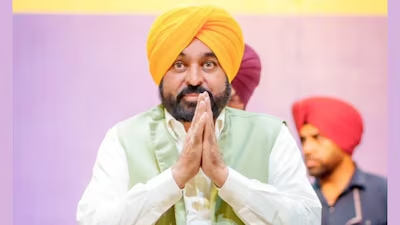
The Punjab government has approved 117 new vehicles for deputy superintendents of police (DSPs) as part of efforts to intensify its statewide campaign against drug trafficking and substance abuse. Chief Minister Bhagwant Mann announced the move during a review of the anti-drug programme in Phillaur, Jalandhar district, on October 16, amid mounting public concern following the killing of anti-drug activist Parvinder Singh Jhota in Mansa.
The vehicles are intended to strengthen police operations and improve the ability of officers to respond to drug-related activity across the state. The announcement came as the government faces questions about its efforts to control the illegal drug trade and protect people campaigning against it.
A review meeting at the Punjab Police Academy brought together senior police officers and government representatives to assess the ongoing campaign, known as Yudh Nashean Virudh. Mann said tackling drugs remained a major priority and called for stronger public participation alongside enforcement measures.
Police would be allowed to act against drug traffickers without political interference, the chief minister said. He also stressed that the response to substance abuse must address both the supply of drugs and the circumstances that lead people to become dependent on them.
Enforcement and Public Participation
The additional vehicles are expected to support police teams working against drug distribution networks. However, their practical impact will depend on how they are deployed, the coordination between districts and the results of enforcement operations.
Mann urged residents to share information about drug trafficking with the authorities and participate in the wider campaign. He argued that law enforcement alone could not resolve the problem and that families, schools and local communities also had a role to play.
The state’s approach includes action against suppliers as well as treatment and rehabilitation for people affected by addiction. Mann said those struggling with substance dependence should receive support to recover rather than being treated solely as offenders.
He also highlighted the role of education and sports in helping young people avoid drugs. Community sporting programmes, including Khedan Watan Punjab Diyan, were cited as part of efforts to encourage participation in constructive activities and promote healthier alternatives.
Jhota’s Killing Puts Drug Enforcement Under Scrutiny
The announcement follows the killing of Parvinder Singh Jhota, an anti-drug activist who had publicly confronted people he accused of selling addictive substances. He was shot dead in Mansa on October 13 during a confrontation at a medical store. The incident sparked protests and renewed demands for action against the illegal drug trade and accountability from local authorities.
The case has intensified scrutiny of the state’s response to drug-related activity. Mann said those responsible for the activist’s death would face legal consequences and that investigators would examine all aspects of the incident, including any possible wider conspiracy established during the probe.
The killing has also sharpened political debate over law and order in Punjab, with opposition leaders questioning the government’s performance and the administration facing pressure to demonstrate that anti-drug measures are producing results.
Centre and State Disagree Over Responsibility
Mann also criticised the central government’s handling of drug trafficking, arguing that Punjab should not be singled out when the problem affects other parts of the country. He called for stronger coordination to curb the movement of drugs across international borders and through wider supply routes.
The chief minister’s remarks underline the competing responsibilities of state and central agencies in addressing trafficking, particularly where cross-border movement is involved.
The approval of 117 vehicles adds resources to Punjab’s anti-drug effort, but the larger test will be whether improved policing, public cooperation, prevention and rehabilitation can deliver sustained results. The government’s next steps will be closely watched as pressure continues to mount over drug abuse and public safety.
Related Stories
Reader comments are moderated as per Daily News Axis editorial standards.